


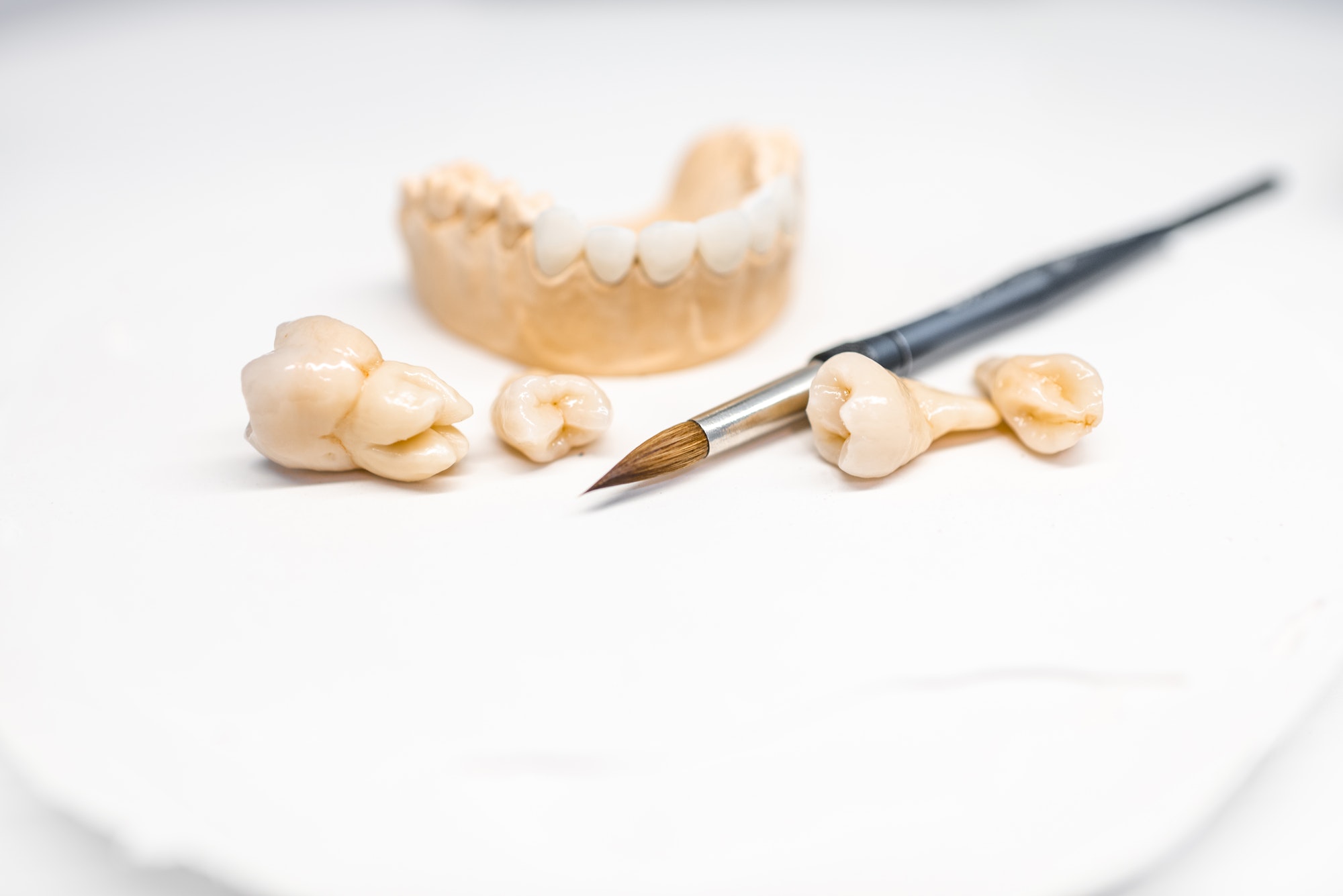
A composite resin crown is a tooth-coloured cap made from acrylic resin mixed with fine glass particles. It is used mainly to restore or protect front teeth and as a temporary crown, because it is more affordable and can often be placed in a single visit, though it is less durable than a ceramic or zirconia crown.
Below, Dr. Viorel Talpa explains how composite resin crowns compare with ceramic crowns on cost, durability and appearance, so you can decide which is right for your tooth.
At some point in our life, most of us may end up needing a dental crown….
Going in for a dental procedure can be a little intimidating and confusing. Dental crowns can involve a significant financial investment, and it is imperative to make the right decision as it can affect your oral and overall health.
Therefore, it always helps if you are equipped with trustworthy information before entering your dentist’s clinic.
This article will brief you on everything there is to know about ceramic and composite resin dental crowns, so keep reading ahead.
What are dental crowns?
Before we dive deep into ceramic and composite resin crowns, let’s first address the basics of a dental crown.
A dental crown is a covering or a cap that fits over the top or visible part of the tooth. It restores a compromised tooth’s shape, size, structure and colour. Moreover, it provides adequate reinforcement to the tooth and ensures its increased life in the oral cavity.
Crowns also form a part of dental bridges and aid in the restoration of missing teeth. Usually, two teeth adjacent to the missing space are used as support and receive dental crowns, and with the help of these false teeth (also known as pontic) are suspended. The crowns and the pontic are manufactured as a single unit.
Why would I need a dental crown?
Wondering why your dentist has advised you a dental crown?
There are several reasons you may need a dental crown which may include:
- When dental cavities become too extensive and destroy a significant chunk of the tooth structure, they can no longer be adequately restored with the help of dental fillings. In addition, the affected tooth becomes weak and is susceptible to breakage. In such a situation, a dental crown is advised after the removal of the decayed tooth structure. Dental crowns adequately restore the tooth structure and establish its function. It also provides the tooth with added stability and protects and saves it from further damage and eventual removal.
- Dental crowns also help restore fractures and broken teeth. It helps keep the weak and broken tooth parts together.
- Dental crowns also serve aesthetic purposes as it helps restore severely misshapen, worn down or stained teeth.
- Dental crowns are often indicated after a large dental filling and in cases of root canal treated teeth (especially large back teeth).
- It holds the dental bridge in place.
- Dental crowns also help restore dental implants.
What are the different types of dental crowns?
There are different types of dental crowns that are advised and customised according to individual patient needs.
Traditional dental crowns cover all the surfaces of your teeth and require extensive preparation. However, if your needs fit a less comprehensive and more conservative approach, your dentist may advise you on 3/4th Crowns and Inlays/Onlays or Veneerlays.
These types of restoration do not cover the entirety of your tooth structure and provide a more conservative approach as compared to full coverage crowns. The dentist will remove the affected part of the tooth and perform minimal reshaping to fix a 3/4th crown or an onlay. However, it is essential to remember that these can only be used when the damage or decay is small or localised to a particular area.
These restorations are used when the damage is too significant to be repaired by a straightforward dental filling but small enough not to need a complete coverage crown.
What materials do dentists use for making your dental crowns and bridges?
Base metal alloys
Base metal alloys crowns or simply metal crowns are made from stainless steel, titanium, chromium, nickel and cobalt alloys. Metal crowns provide superior resistance and support. However, one of the most significant disadvantages of metal crowns is that they are aesthetically undesirable as it gives your smile a metallic appearance. Moreover, there is always a risk of galvanised shock in patients who have multiple metal dental fillings or prostheses.
Metal crowns are still widely due to their long life span but are only reserved for back teeth.
Gold
Gold was also used for making dental crowns because of its noble metal properties, high value and good resistance. However, it too has aesthetic concerns and is not used anymore.
Porcelain fused to metal (PFM)
PFM crowns, as the name suggests, are a combination of metal and porcelain (ceramic). The core or the inner layer of the crown is made from a base metal alloy like stainless steel. Over this, a layer of tooth-coloured porcelain is added. These crowns ensure aesthetics and good support. However, the outer porcelain coating tends to chip off, revealing the metal underneath, which in the long run compromises aesthetics. The layer may come off entirely which mandates replacement.
PFM crowns are also used to restore the back teeth as they bear the brunt of chewing forces and need added reinforcement which metal provides.
Ceramic and Composite Resin Crowns
Owing to the disadvantages of metal crowns, a need for more aesthetically acceptable crowns and bridges arrived. This led to the invention of All ceramic and Composite resin crowns. These crowns have gained immense popularity in recent times and are vastly used.
Let us take an in-depth look at these two materials….
What are the major differences between Composite Resin Crown and Ceramic Dental Crown?
| Crown type | Appearance | Lifespan | Best for | Cost |
|---|---|---|---|---|
| Composite resin | Good, tooth-coloured, can dull over time | ~3–5 years | Front teeth, temporary, budget | € |
| All-ceramic / E-max | Excellent, most natural | ~10–15 years | Visible front teeth | €€€ |
| Zirconia | Very good, slightly more opaque | 15–20+ years | Back teeth, grinders, permanent | €€€ |
| PFM | Good, can show a thin grey line at the gum | ~10–15 years | Back teeth, bridges | €€ |
| Metal / gold | Metallic (not tooth-coloured) | 20+ years | Back molars only | €€ |
Composite Resin Crowns
Composite resin crowns are made entirely of composite resin, a combination of acrylic resin (polymethyl methacrylate) and glass (silicon dioxide). Composite resin material can be manipulated to have a colour that matches your natural teeth shade.
Composite resins crowns are primarily used a temporary restoration and protect the tooth until a permanent crown is manufactured. These crowns are often interim measures as they lack strength, wear down quickly and cannot withstand chewing forces adequately.
Advantages
- Highly aesthetic
- It can be used as a permanent option for the restoration of front teeth
- It helps conceal stained and crooked front teeth
- Inexpensive compared to porcelain crowns
- Easy going on opposing teeth (does not wear them down)
- A good alternative to dental fillings
Disadvantages
- It is a temporary measure.
- It cannot be used for permanent restoration of back teeth
- Short life span (3-4 years)
- Lacks resistance and cannot establish proper chewing or biting
- Requires greater tooth preparation for added support
Ceramic Dental Crowns
The entire crown is made of ceramic or porcelain. They have the highest aesthetic value compared to other dental crown materials. They can be easily manipulated to give your crown a glistening natural appearance and have a translucent hue like natural teeth.
Types of ceramic crowns
Feldspathic Porcelain Crowns are traditional or standard porcelain crowns and offer a natural appearance with adequate strength. These crowns are made in layers.
Zirconia Crowns
Are the most robust and aesthetically superior type of dental crowns. They are incredibly durable and highly resistant to fracture. They can effortlessly bear the brunt of biting and chewing forces.
Zirconia crowns can be manufactured from a single block (monolithic) which further contributes to their immense strength and longevity.
Aluminous Crowns (Procera, Empress and Emax)
Tend to be more porous and have excellent translucent light-reflective properties, which ensures a lifelike appearance to the crown. Procera, Empress and Emax are three different kinds of aluminous crowns.
Ceramic crowns can either be made in a dental laboratory or can be milled in the dental clinic with the help of CAD-CAM.
Advantages of Ceramic Crowns
- Excellent and most superior form of dental crowns.
- Highly pleasing aesthetics.
- Lifelike and natural appearance, especially with zirconia crowns.
- High strength
- Zirconia crowns can last up to 20 years or even more with proper care.
- Minimal to no chances of any adverse reaction and is very well accepted.
- Minimal tooth preparation
Disadvantages of Ceramic Crowns
- Ceramic crowns (especially zirconia, Empress, E-max and Procera) tend to be expensive as compared to other dental crowns.
- Needs proper care
Composite resin crown vs porcelain crown: which is better?
For a visible front tooth where budget or a single visit matters, a composite resin crown gives a natural look at a lower price, but you should expect to replace it within a few years. For a permanent, hard-wearing result, especially on back teeth or if you grind your teeth, a porcelain or zirconia crown lasts far longer and resists chipping and staining much better.
In practice, I often place a composite crown as a temporary or interim restoration and reserve porcelain or zirconia for the final crown.
How long does a composite resin crown last, and how do I care for it?
A composite resin crown typically lasts three to five years, less on back teeth that take heavy chewing forces. To get the most out of it:
- Brush twice a day with a soft brush and floss daily.
- Avoid biting very hard foods such as ice, nuts and hard sweets.
- If you grind or clench, wear a night guard, it protects the crown and your natural teeth.
- Limit coffee, tea, red wine and tobacco, which stain composite faster than porcelain.
- Have the crown checked and polished at your regular dental visits.
Dental crown procedure
The procedure for all types of crowns remains the same. The dentist will use a dental drill to clear out any dental decay or damage and then trim the tooth to ensure it can receive a dental crown.
Porcelain crowns require less tooth preparation and offer a more conservative approach than composite or metal crowns.
Next, dental impressions are taken of your upper and lower teeth.
These serve as a guide for the fabrication of your dental crowns. Your dentist will also select the shade for your crown or bridge during this appointment.
In the next appointment, you will be called for a trial.
The dentist will check for the crowns or bridges fit, and once they approve, it goes for final fabrications and adjustment. In the subsequent appointment, your crown will be fixed with the help of dental cement.
Frequently asked questions
A composite resin crown is usually the most affordable crown type. Exact cost depends on the tooth; part of it may be reimbursed by the CNS. book a consultation for a precise quote.
Around three to five years with good care, less on back teeth. Ceramic and zirconia crowns last much longer, ten to twenty years or more.
Yes, they are tooth-coloured and look natural, which makes them a good choice for front teeth, especially on a budget or as a temporary crown. For a permanent front-tooth crown, porcelain gives a more lifelike, longer-lasting result.
Composite is cheaper and faster; porcelain and zirconia are stronger and last far longer. Composite suits temporary or budget cases and front teeth; porcelain or zirconia suit permanent restorations and back teeth.
Often yes. A composite crown can usually be made and placed in a single appointment, unlike lab-made ceramic crowns that need two visits.
The CNS reimburses part of the cost of certain crowns. See our guide to CNS dental coverage for the current rules, and confirm your case with us before treatment.
A composite resin crown is usually the most affordable crown type. Exact cost depends on the tooth; part of it may be reimbursed by the CNS. book a consultation for a precise quote.
Around three to five years with good care, less on back teeth. Ceramic and zirconia crowns last much longer, ten to twenty years or more.
Yes, they are tooth-coloured and look natural, which makes them a good choice for front teeth, especially on a budget or as a temporary crown. For a permanent front-tooth crown, porcelain gives a more lifelike, longer-lasting result.
Composite is cheaper and faster; porcelain and zirconia are stronger and last far longer. Composite suits temporary or budget cases and front teeth; porcelain or zirconia suit permanent restorations and back teeth.
Often yes. A composite crown can usually be made and placed in a single appointment, unlike lab-made ceramic crowns that need two visits.
The CNS reimburses part of the cost of certain crowns. See our guide to CNS dental coverage for the current rules, and confirm your case with us before treatment.
In summary, dental crowns are used to restore teeth, protect weak and broken tooth parts, and serve aesthetic purposes. Ceramic and composite resin crowns are more aesthetically acceptable than metal crowns. Composite resin crowns are cheaper and can be completed in a single visit but are less durable. Ceramic crowns are more expensive and require multiple visits but offer greater durability and superior aesthetics.
A note from Dr. Talpa
In my practice at TalpaDent, I recommend a composite resin crown when a patient needs a quick, affordable fix for a front tooth, or a temporary crown while a permanent one is being made. I move to zirconia when the tooth is a molar, the patient grinds at night, or they want a once-and-done solution. The most common mistake I see is patients keeping a temporary composite crown for years and it wearing through.
If you have not yet received an answer to your questions, do not hesitate to ask us any question in the section below, we will answer as soon as possible. If you find this article useful, we invite you to leave us a comment in the comments section.


Dr. Talpa is a licensed dentist with 12 years of clinical experience and owner of Advanced Smile Dental Care. Dedicated to making dental health information accessible, Dr. Talpa writes to help readers make informed decisions about their oral care. With a background in general and cosmetic dentistry, Dr. Talpa is passionate about translating complex dental topics into practical advice. When not treating patients, Dr. Talpa enjoys staying current with the latest advances in dental science and technology.


The overview of dental crowns reminded me of my own choice when a tooth weakened over years. I found levydentalarts.com/how-ceramic-crowns-can-restore-strength-to-weak-or-damaged-teeth/ and it helped me picture how ceramic could feel natural. After placement, eating and talking felt easier, and I tell friends to consider their comfort and goals when choosing.