

Last reviewed: August 2026
The CNS covers consultations, scaling, fillings, root canal treatment, extractions, periodontal care, anaesthesia and dental X-rays at 88% of official tariffs for adults and 100% for under-18s. Prostheses are covered at 80%. Implants, adult orthodontics and cosmetic treatments are not covered.
That is the answer most people need. What follows is the detail that determines what you actually pay.
The Three Categories of Dental Care
The Caisse nationale de santé divides dentistry into three groups, and each has its own reimbursement logic. Understanding which group your treatment sits in tells you almost everything about what comes back to you. Our full guide to dental costs and CNS reimbursement in Luxembourg covers the wider financial picture; this article focuses on coverage itself.
Category 1: General, Gum and Surgical Dental Care
This is the largest group and the one most patients use. It covers:
- Normal and emergency consultations
- Home and hospital visits by a dentist, including emergencies
- Scaling
- Periodontal care, including our periodontology treatments
- Root canal treatment, known clinically as pulpectomy
- Fillings and the removal of old fillings
- Local and regional anaesthesia administered by the dentist
- General anaesthesia in hospital, administered by an anaesthetist
- Simple and surgical tooth extractions
- Dental X-rays, including cone beam imaging under certain conditions
Reimbursement: 88% of official tariffs for adults, 100% for children under 18.
Two frequency limits apply that catch people out. Since January 2024, conventional scaling (code DS1) is reimbursed twice per calendar year. Periodontal scaling (DP41), performed only within a periodontal treatment plan, is reimbursed once per calendar year. If you have already used both DS1 sessions by August, a third cleaning that year is yours to pay for.
Category 2: Dental Prostheses
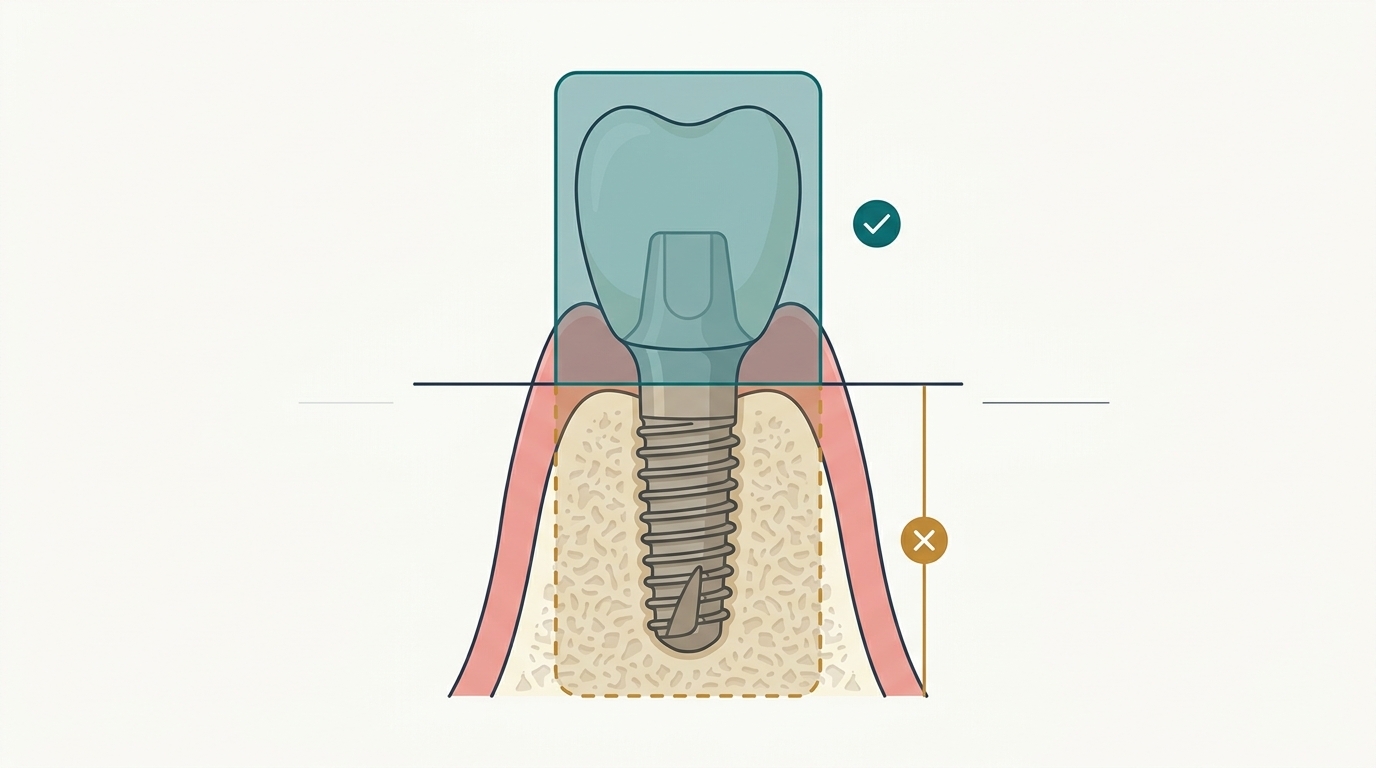
Crowns, bridges, post-retained teeth, and both partial and complete dentures fall here. So does the crown fitted on top of an implant, even though the implant itself does not qualify.
Reimbursement: 80% of official tariffs.
The remaining 20% is waived, meaning full coverage, in four situations:
- You can show you attended a dentist for a preventive check-up in each of the two calendar years before the prosthesis was delivered
- The patient is under 18
- The work is the renewal or repair of a complete denture
- The prosthesis is a restorative maxillofacial one
That first condition is worth reading twice, because it is the single most valuable piece of information in this article. Two years of routine check-ups converts an 80% reimbursement into a 100% one on work that is frequently the most expensive dentistry a person has done. In our Steinfort and Limpertsberg clinics we see patients arrive needing a bridge who have not been seen for three or four years, and the gap between what they will be reimbursed and what they could have been reimbursed is entirely avoidable. Our preventive care is worth attending for that reason alone.
Renewal periods apply too. Fixed prostheses such as crowns and bridges are renewable every 12 years. Removable prostheses are renewable every 5 years. The medical inspectorate can shorten those periods after a maxillofacial fracture, a tumour in the maxillo-buccal region, very high-dose bisphosphonate treatment, or prosthetic work carried out before age 17.
Category 3: Orthodontics
Fixed appliances, lingual systems and removable clear aligners are all covered in principle, but only for children, and only under conditions.
Reimbursement: 100% of nomenclature rates if the patient is under 18 at the time of invoicing, 88% if they have already turned 18.
The hard rule is the start date. Treatment is only covered if the appliance is fitted before the patient turns 17. Adult orthodontic treatment is not covered at all. Prior authorisation from the Social Security Medical Inspectorate is mandatory, and once granted, treatment must begin within 12 months or a new authorisation is needed. If you are exploring options for a child, our orthodontic treatments page explains what is involved.
One caveat: if you choose ceramic or plastic brackets rather than metal ones for aesthetic reasons, the additional cost is not covered.
What Is Not Covered at All
| Treatment | CNS position |
|---|---|
| Dental implants | Not covered, except for anodontia, oligodontia and certain maxillofacial cases |
| Adult orthodontics | Not covered if treatment began at or after age 17 |
| Teeth whitening | Not covered, cosmetic |
| Cosmetic veneers | Not covered where placed for appearance rather than function |
| Aesthetic upgrades | Not covered, you pay the difference above the standard option |
The implant exclusion is the one that produces the most difficult conversations. An implant is often the best clinical solution for a missing tooth, and it is also the one the state does not help with. Where a more conservative option genuinely exists, preserving the natural tooth, or a bridge covered under prosthetic rules, we will say so. Preservation is our default position anyway, and here it happens to align with your budget.
When to See a Dentist About This
If you are due a check-up and have not been in over a year, book one now rather than waiting for a problem. Beyond the clinical case, an annual visit protects your entitlement to 100% prosthetic reimbursement should you ever need it, and it keeps your annual allowance in use. Our prevention page explains what a routine appointment involves.
If you have been handed a treatment plan and are unsure which category each item falls into, bring the quote in. Reading it against the nomenclature takes a few minutes and removes the guesswork.
Related Questions
Does the CNS cover emergency dental appointments?
Yes. Emergency consultations and emergency visits by a dentist, whether at home or in hospital, are listed among covered acts and reimbursed at the standard rates: 88% for adults, 100% for under-18s.
Are dental X-rays covered?
Yes. A range of dental radiographs is covered, and cone beam volumetric imaging is reimbursed under certain conditions. Ask before the scan whether your case meets them. Our 2D and 3D dental radiology page explains when each is used.
Is a root canal covered by the CNS?
Yes. Pulpectomy sits in the general dental care category and is reimbursed at 88% for adults and 100% for children. The crown often fitted afterwards is treated separately, under prosthetic rules at 80%.
Book a Check-Up at Steinfort or Limpertsberg
TalpaDent has clinics at 71 Rue de Luxembourg, L-8440 Steinfort and 55-57 Av. Pasteur, L-2311 Limpertsberg. Call +352 20 29 64 00 or book online.
This article provides general information about CNS dental coverage in Luxembourg and is not a substitute for a personal dental consultation or for advice from the CNS. Reimbursement rules change; confirm current details with the CNS.

Dr. Talpa is a licensed dentist with 12 years of clinical experience and owner of Advanced Smile Dental Care. Dedicated to making dental health information accessible, Dr. Talpa writes to help readers make informed decisions about their oral care. With a background in general and cosmetic dentistry, Dr. Talpa is passionate about translating complex dental topics into practical advice. When not treating patients, Dr. Talpa enjoys staying current with the latest advances in dental science and technology.