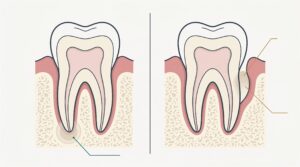


A tooth infection can kill within 24 to 72 hours once it spreads beyond the tooth to the airway, bloodstream or brain. Reaching that stage usually takes weeks or months.
The tooth is not what is dangerous. The spread is.
Stop Reading and Call Emergency Services If You Have Any of These
- Difficulty breathing, or a feeling that your throat is closing
- Difficulty swallowing, or drooling because you cannot swallow
- Swelling spreading down your neck, or under your tongue
- Swelling closing your eye
- Fever or shivering alongside facial swelling
- Confusion, slurred speech, or extreme drowsiness
- You cannot open your mouth more than two centimetres
Call 112 in Luxembourg and anywhere in the European Union. Call 911 in the United States. Go to a hospital emergency department, not a dental surgery. These signs mean the infection has left the tooth, and the CDC lists several of them among the warning signs of sepsis.
If none of those apply to you, you almost certainly have hours or days rather than minutes. Keep reading, and book a dentist for the morning.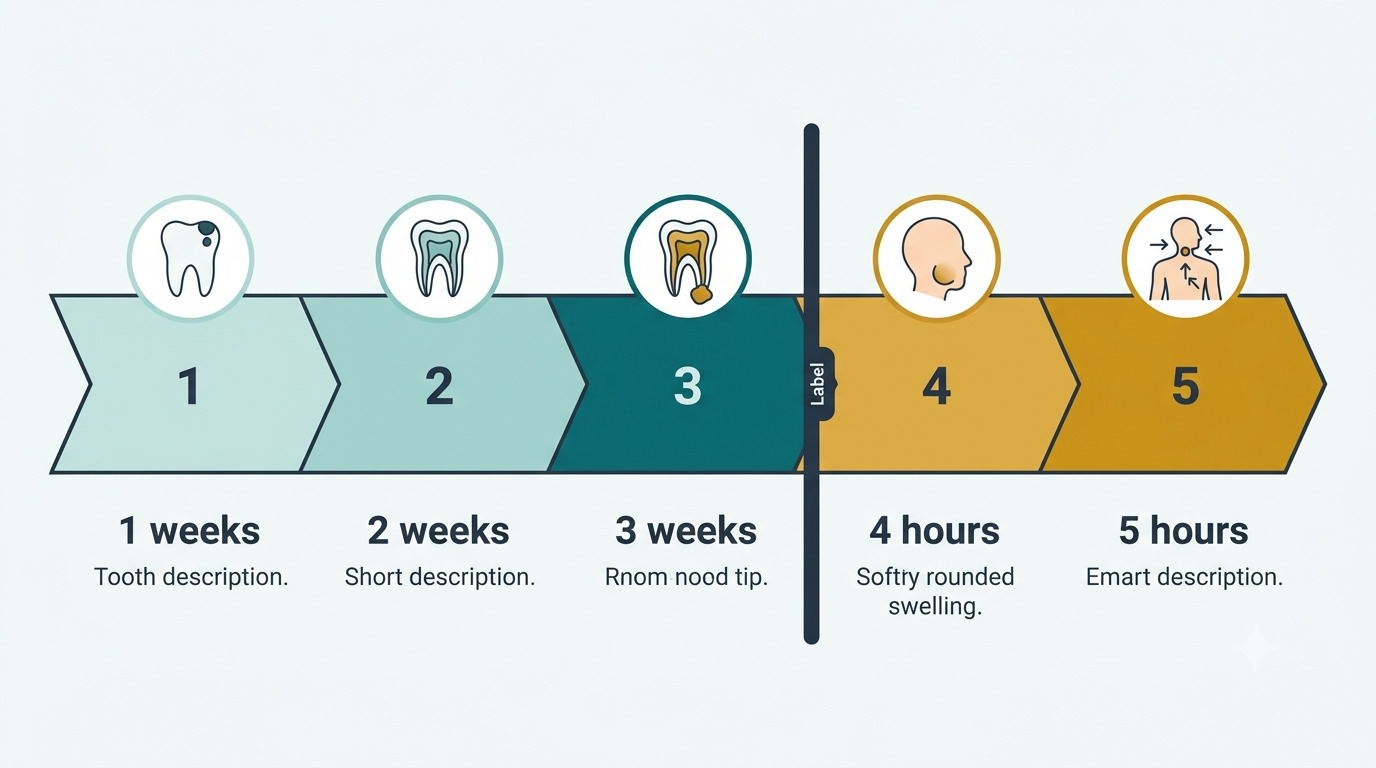
The Honest Timeline, Stage by Stage
No dentist can give you an exact number of days, and anyone who does is guessing. What we can give you is the sequence, because the sequence is consistent even when the speed is not.
| Stage | Typical duration | What is happening | Danger level |
|---|---|---|---|
| Decay reaching the pulp | Months to years | Bacteria work through enamel and dentine toward the nerve | None yet |
| Pulp infection | Days 1 to 3 | The nerve becomes inflamed, then dies. Severe toothache. | Low |
| Abscess forms at the root tip | Days 3 to 7 | Pus collects in the bone. Tooth feels raised and painful to bite. | Low to moderate |
| Spread into facial tissue | Day 7 and beyond | Visible swelling of cheek, jaw or floor of mouth | High. Same day care. |
| Airway, bloodstream or brain | 24 to 72 hours once spread begins | Ludwig’s angina, sepsis, cavernous sinus thrombosis | Emergency. Hospital now. |
Once the infection leaves the tooth and systemic symptoms begin, severe decline can happen within 24 to 72 hours. Before that point the timeline is measured in weeks. After it, the timeline is measured in hours. Visible facial swelling is the line between the two.
The important line is the fourth one. Everything above it is measured in weeks. Everything below it is measured in hours. Visible facial swelling is the moment the clock changes speed, and it is the point at which most people are still waiting to see whether it settles down.
Reaching the final stage is uncommon. The American Dental Association’s patient service MouthHealthy confirms that a dental abscess will not clear without treatment, but with prompt care almost all are dealt with long before they become dangerous.
Why the Timeline Varies So Much Between People
Two people can have identical abscesses and completely different outcomes. Four things account for most of that difference.
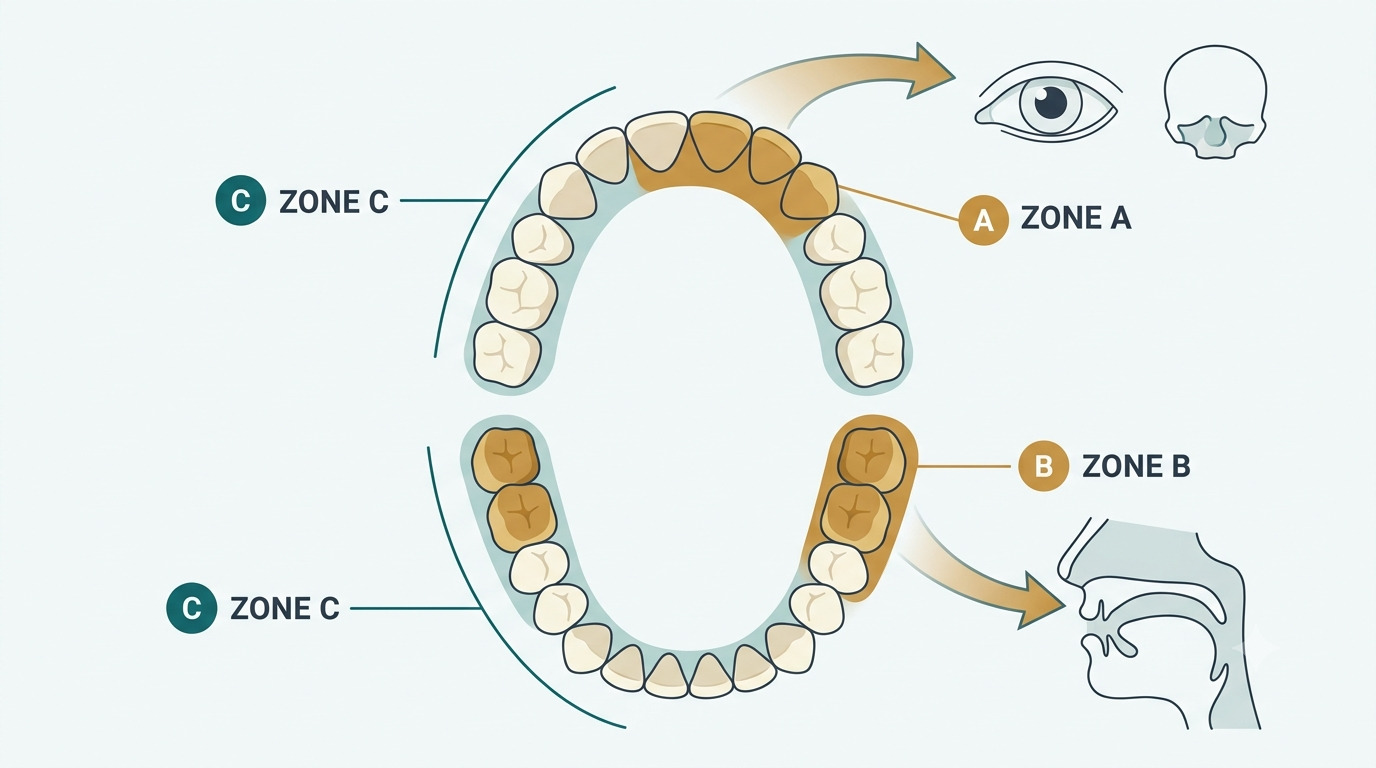
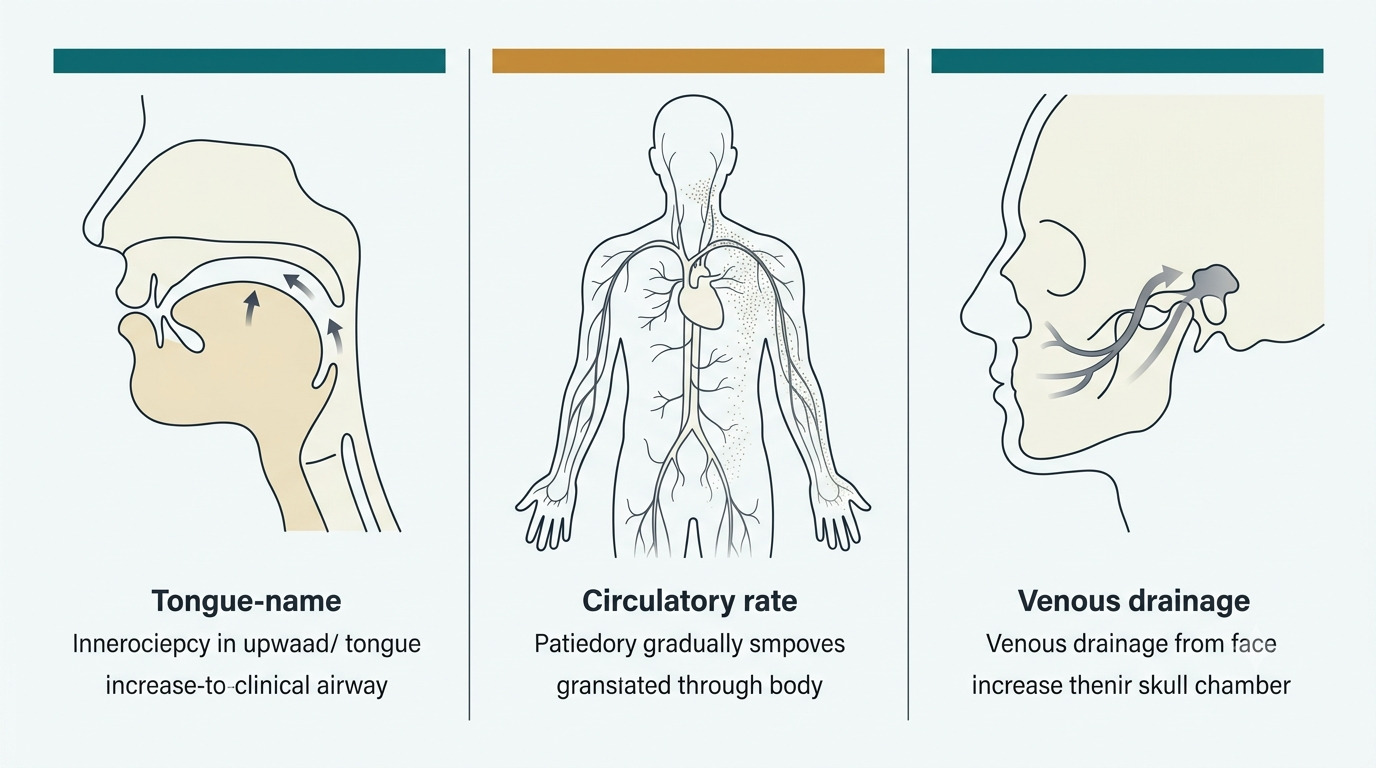
Where the tooth is. This matters more than anything else and is the factor almost no article mentions. A lower back tooth sits close to the floor of the mouth, so infection there can push the tongue upward and narrow the airway. An upper front tooth sits close to the veins that drain toward the brain. A lower front tooth is comparatively far from anything critical. Same infection, very different risk.
Your immune system. Poorly controlled diabetes, chemotherapy, immunosuppressant medication, HIV, or recent major illness all slow the response that would normally wall the infection off.
Whether it has drained. An abscess that has burst and is draining into the mouth is under less pressure than one that is sealed. That does not mean it is safe, but it does change the speed.
Antibiotics already taken. A partial course can suppress symptoms without clearing the source, which masks the warning signs while the infection continues underneath. This is one reason the World Health Organization treats oral disease as a serious global health issue rather than a cosmetic one.
The Three Ways a Tooth Infection Actually Kills
It is never the toothache. It is one of three specific mechanisms.
1. Airway obstruction, called Ludwig’s angina. Infection from a lower molar spreads into the floor of the mouth. The swelling pushes the tongue up and back. The airway narrows. This is the fastest of the three and can become critical within hours. The warning signs are difficulty swallowing, drooling, a muffled voice, and inability to lie flat.
2. Sepsis. Bacteria enter the bloodstream and the immune response damages the body’s own organs. Sepsis is a medical emergency in its own right, and Sepsis Alliance describes it as the body’s extreme response to an infection. Untreated, it progresses to septic shock and organ failure.
3. Spread toward the brain. Infection from upper teeth can travel through the veins of the face into the cavernous sinus at the base of the skull, causing a clot, or into the brain itself, causing a brain abscess or meningitis. Rare, but this is why upper front tooth infections with eye swelling are treated so seriously.
All three are uncommon. All three are survivable with prompt hospital treatment. All three become far more dangerous with every hour of delay.
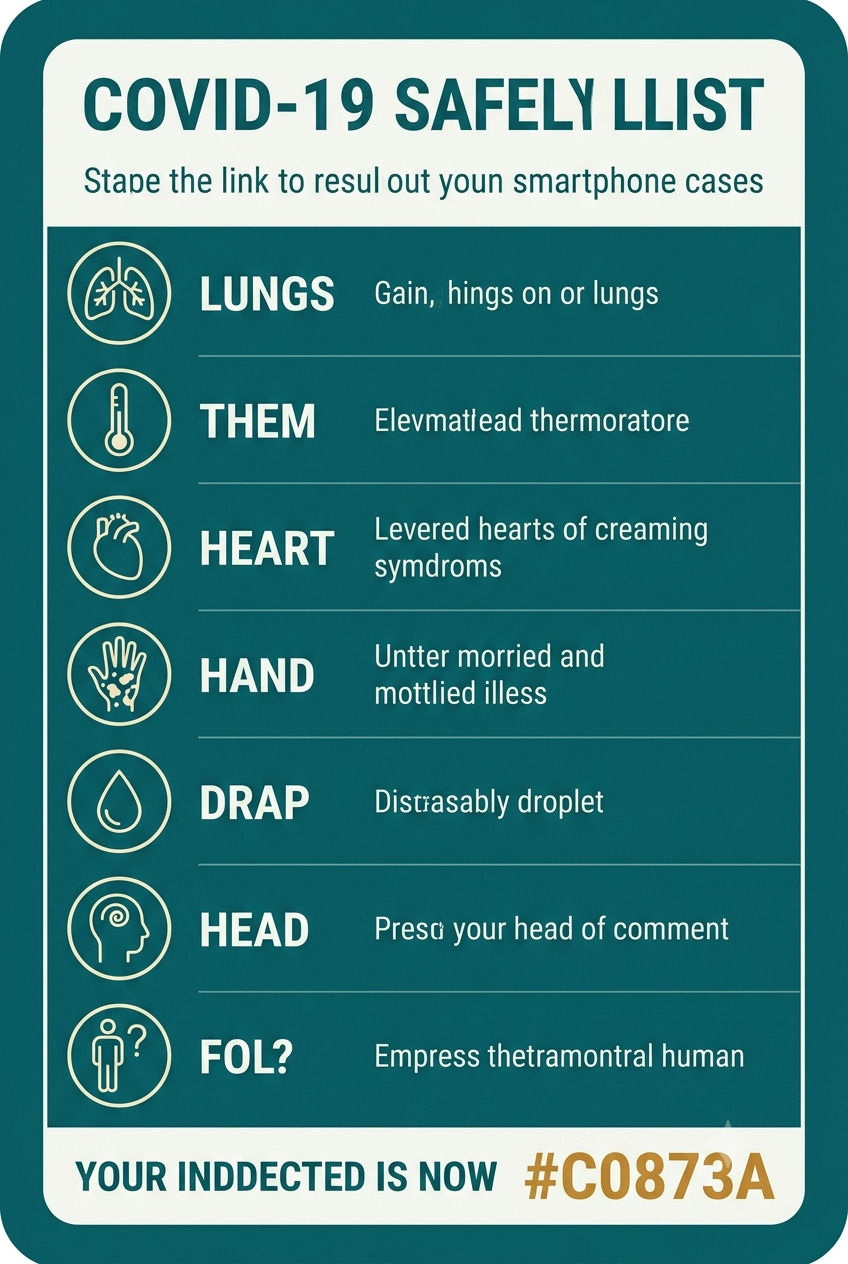
How to Check Yourself for Sepsis Right Now
If you have a tooth infection and feel generally unwell, use this. It takes thirty seconds and it is the most useful thing on this page after the emergency box.
| Check | Concerning finding |
|---|---|
| Breathing | Faster than normal at rest, or breathless from talking |
| Temperature | Very high, or unusually low, or uncontrolled shivering |
| Heart rate | Racing or pounding while sitting still |
| Skin | Mottled, blotchy, unusually pale, or blue lips |
| Urine | Not passed urine in the last eight hours |
| Mental state | Confused, disoriented, slurred speech, hard to rouse |
| Feeling | A sense that something is seriously wrong |
Any one of these alongside a tooth infection means hospital, not a dental appointment. The last row is not a joke. Clinicians take “I feel like I am dying” seriously because patients are often right, and the Global Sepsis Alliance includes a feeling of severe illness among the recognised warning signs.
If the Pain Stopped, You Are Not Better
This is the most dangerous misunderstanding in dentistry, and no competing article on this question addresses it.
An abscess often bursts on its own. Pus drains, pressure falls, and the pain vanishes, sometimes dramatically, often with a sudden salty or foul taste. It feels exactly like recovery.
It is not. The pressure has gone. The infection has not. What has usually happened is that the pulp died completely, so there is no living nerve left to hurt, and the infection has found a drainage route. It continues destroying bone quietly and it will flare again.
We regularly see patients who describe a bad episode months ago that “sorted itself out.” On the radiograph there is a dark area at the root tip that has been growing ever since. The tooth is often still saveable at that point, usually with root canal treatment, and it will never be easier to save than it is today.
A tooth infection that stops hurting has not been cured. It has gone quiet.
Where to Go in the United States
If you have any of the emergency signs above, both countries work the same way: hospital emergency department, immediately. In Luxembourg call 112. In the United States call 911. Do not phone a dental practice first, because a dental surgery cannot secure an airway or give intravenous antibiotics.
If you have pain and no emergency signs, in the United States: call a dentist first rather than going to an emergency room. Most American emergency departments cannot perform root canal treatment or extractions. They will give you antibiotics and pain relief and send you to a dentist anyway, which costs considerably more and delays the treatment that actually resolves the problem. Many areas have emergency dental clinics and dental schools offering urgent appointments at reduced cost.
In the United States, coverage depends entirely on your plan, and an emergency room visit for a dental problem is usually the most expensive route to the least useful outcome.
Where to Go in Luxembourg
If you have pain and no emergency signs, in Luxembourg: call a dental practice during working hours and ask for an emergency slot. Most clinics, ours included, keep daily slots free. At weekends a national on-call dental service operates at the Centre Hospitalier de Luxembourg, staffed in rotation by dentists from across the country, and the current schedule is published on the official Luxembourg health portal. Outside all hours, 112 will direct you.
That distinction matters financially. In Luxembourg, emergency dental consultations are reimbursed by the CNS at 88 percent of official tariffs for adults and 100 percent for under-18s.
What Happens at the Hospital
Knowing this removes some of the fear, and fear is what makes people wait.
You will be assessed quickly, because facial swelling is triaged as urgent. Expect blood tests, observations, and often a CT scan to see how far the infection has spread and whether the airway is threatened.
Treatment usually means intravenous antibiotics, which reach the tissues far faster and at higher concentration than tablets, and surgical drainage under general anaesthetic to release the pus. If the airway is compromised, protecting it comes before everything else. The source tooth is then treated or removed, sometimes during the same admission, sometimes afterwards through oral surgery.
Most people admitted for a spreading dental infection go home within a few days and recover completely. The outcomes are good. They are good because people came in.
What Happens at the Dentist If You Caught It Early
If you have pain and perhaps a small localised swelling, but none of the emergency signs, this is a routine dental problem with a routine solution.
The dentist will examine the area, take an X-ray to see the extent of bone involvement, and drain the abscess. Draining it is what stops the pain, and it is often the fastest relief a patient will ever feel in a dental chair.
Then the cause is dealt with: root canal treatment to clean and seal the root canal system where the tooth can be saved, or extraction where it cannot.
Antibiotics alone are not a cure. They cannot reach inside a dead tooth, because there is no blood supply left to carry them there. They control spread and buy time, and the source still has to be treated. A prescription from a doctor is a bridge to dental treatment, not a substitute for it.
Who Is at Higher Risk
Some people should treat a dental infection with more urgency than others, and should not wait to see whether swelling settles.
- Poorly controlled diabetes
- Immunosuppression from medication, chemotherapy or disease
- Heart valve disease or a prosthetic heart valve
- Age over 65, or very young children
- Pregnancy
- Alcohol dependence or malnutrition
- Anyone who has had a spreading dental infection before
If you are in one of these groups and you have facial swelling, go to hospital rather than waiting for a dental appointment. The American Association of Endodontists publishes patient guidance on when tooth infections require urgent assessment.
Frequently Asked Questions
These build on the practical guidance in our page on preventive dental care, which is where almost all of this becomes avoidable.
Most tooth infections take weeks or months to become dangerous. Once infection spreads beyond the tooth into the airway, bloodstream or brain, death can occur within one to three days without treatment. Facial swelling is the point at which the timeline shortens from weeks to hours.
It is extremely rare, but Ludwig's angina can obstruct the airway within hours rather than days. If you have swelling under the tongue, difficulty swallowing, drooling or a muffled voice, this is a same night emergency and you should call emergency services rather than wait for morning.
Visible swelling of the cheek, jaw or under the chin, fever or shivering, swollen glands in the neck, feeling generally unwell, and a rapid heartbeat. Pain spreading to the ear, jaw or neck is also a warning. Any of these means same day care.
Bloodstream involvement means sepsis. Signs include fast breathing, a racing heart at rest, very high or very low temperature, mottled or pale skin, confusion, not passing urine for eight hours, and a strong feeling that something is badly wrong. These require a hospital, not a dentist.
No. Antibiotics control the spread of infection but cannot reach inside a dead tooth, where there is no blood supply to carry them. The infected pulp must be removed by root canal treatment, or the tooth extracted. Antibiotics without dental treatment only postpone the problem.
No. It may drain and stop hurting, which is not the same as healing. The pulp inside the tooth cannot regenerate, and the infection continues in the surrounding bone. Without treatment it will recur, usually worse.
There is no safe period. Some remain chronic and quiet for months; others spread within a day. Because you cannot tell in advance which you have, the sensible approach is to be seen within 24 hours, and immediately if there is any facial swelling or fever.
No, and this is what makes them dangerous. Once the pulp dies the tooth often stops hurting while the infection continues in the bone. Many spreading infections are discovered in people who had no pain at all in the weeks beforehand.
No. A tooth abscess does not go from healthy to fatal in a single night. But if the infection has already spread into the face or neck, collapse can happen within 24 to 72 hours, and that window can begin while you are asleep.
Former NFL wide receiver Mike Williams died in September 2023, aged 36, from bacterial sepsis with brain abscesses caused by untreated tooth decay. Actor Andy Hallett died in 2009 of heart failure following a dental infection. In 2007, twelve-year-old Deamonte Driver died after an abscess spread to his brain.
No. A tooth abscess does not go from healthy to fatal in a single night. But if the infection has already spread into the face or neck, collapse can happen within 24 to 72 hours, and that window can begin while you are asleep.
The signs are difficulty breathing or swallowing, swelling spreading down the neck or under the tongue, fever or shivering alongside facial swelling, confusion, and being unable to open your mouth more than two centimetres. Any of these means hospital immediately, not a dental appointment.
Yes. In a US study of 61,439 hospital admissions for tooth abscess between 2000 and 2008, 66 people died about one in a thousand of those ill enough to be admitted. Most tooth infections never reach hospital. The rarity comes from treatment, not from the infection being harmless.
Sepsis feels like severe flu arriving very fast: shivering and shaking, a racing heart, breathlessness, confusion, and skin that looks pale, blotchy or grey. The tooth pain often fades at this stage because the nerve has died. Less pain does not mean you are getting better.
No. Mouthwash and salt water cannot reach the infection. The bacteria sit inside the pulp of the tooth and in the bone at the root tip, sealed behind enamel. Rinsing can ease discomfort and keep a draining abscess clean, but it cannot remove the source.
No. Pain usually stops because the nerve inside the tooth has died, not because the infection has cleared. The bacteria remain active in the bone around the root and can still spread. A toothache that disappears on its own still needs a dentist, often more urgently than one that hurts.
There is no fixed timeline. Spread to the brain is rare and usually follows weeks or months of untreated infection, but once bacteria reach the deep facial spaces it can happen within days. Upper teeth carry more risk because of their closeness to the sinuses and the veins behind the eye.
No. Antibiotics hold an infection back but do not remove its source, which is the dead or infected tissue inside the tooth. The infection usually returns once the course finishes. Permanent treatment is root canal therapy, extraction, or surgical drainage of the abscess.
Some people live months or even years with a chronic, low-grade tooth infection that drains and causes little pain. That is not safety, it is delay. The risk is not steady over time it rises sharply the moment the infection escapes the tooth into surrounding tissue.
No, the clinical advice is identical: swelling with fever, or any difficulty breathing or swallowing, is a hospital emergency. Only the route differs. In the UK, NHS 111 handles urgent dental problems and 999 handles emergencies. In the US, it is 911 and a hospital emergency room.
Facial Swelling? Do Not Wait for an Appointment
If you have swelling with fever, difficulty swallowing or breathing, go to a hospital emergency department now. If you have a painful tooth without those signs, call us first thing and we will find you an emergency slot.
TalpaDent, 71 Rue de Luxembourg, L-8440 Steinfort and 55-57 Av. Pasteur, L-2311 Limpertsberg. Call +352 20 29 64 00.
- Shah AC, Leong KK, Lee MK, Allareddy V. “Outcomes of hospitalizations attributed to periapical abscess from 2000 to 2008: a longitudinal trend analysis.” Journal of Endodontics, September 2013.
jendodon.com/article/S0099-2399(13)00471-8/abstractUsed in Q4 the 61,439 admissions and 66 deaths figures. - National Inpatient Sample analysis of orofacial infections, 2020–2022. Journal of Endodontics, 2025.
sciencedirect.com/science/article/pii/S0099239925006478Supports Q4 and Q9 mortality rises from 1.2% for facial infections to 4.9% once the infection reaches the brain, cavernous sinus or chest cavity. - “Oral Facial Infection of Dental Origin: A Guide for the Medical Practitioner.” StatPearls, NCBI Bookshelf.
ncbi.nlm.nih.gov/books/NBK542165/Historical context “teeth” recorded as the fifth or sixth leading cause of death in 1600s London, and the 10–40% mortality figure from 1908. Use the 1908 figure only with its date attached; it describes the era before antibiotics. - “Tragic Results When Dental Care Is Out Of Reach.” PBS Frontline.
pbs.org/wgbh/frontline/article/tragic-results-when-dental-care-is-out-of-reach/Used in Q6 the Deamonte Driver case. - Georgetown University O’Neill Institute background on the Deamonte Driver case and the coverage reforms that followed.
oneill.law.georgetown.eduSecondary source for Q6. - Mike Williams needs one more check before you publish.The cause of death is widely reported as bacterial sepsis with cerebral abscesses following dental caries and retained tooth roots. Find a primary news report of the medical examiner’s finding and link to that, not to a dental blog. If you cannot find one, remove him from Q6 and keep Hallett and Driver.
- Sepsis Alliance signs and symptoms of sepsis.Used for Q5. You already cite Sepsis Alliance elsewhere in the article, so link the symptom list to the same page.
- Already cited in your article and worth keeping: CDC, World Health Organization, and ADA MouthHealthy.Keep every existing inline link. The new Sources block sits alongside them, it does not replace them.
Written and medically reviewed by Dr. Viorel Talpa,
Published 1 September 2026 · Last reviewed [2 September 2026]

Dr. Talpa is a licensed dentist with 12 years of clinical experience and owner of Advanced Smile Dental Care. Dedicated to making dental health information accessible, Dr. Talpa writes to help readers make informed decisions about their oral care. With a background in general and cosmetic dentistry, Dr. Talpa is passionate about translating complex dental topics into practical advice. When not treating patients, Dr. Talpa enjoys staying current with the latest advances in dental science and technology.