

Last reviewed: August 2026
Yes. If you work in Luxembourg you are affiliated to the CNS, and dental treatment received in Luxembourg is reimbursed under Luxembourg rules: 88% of official tariffs for adults, 80% for prostheses, 100% for under-18s. Care in your country of residence is reimbursed by your local fund at its rates.
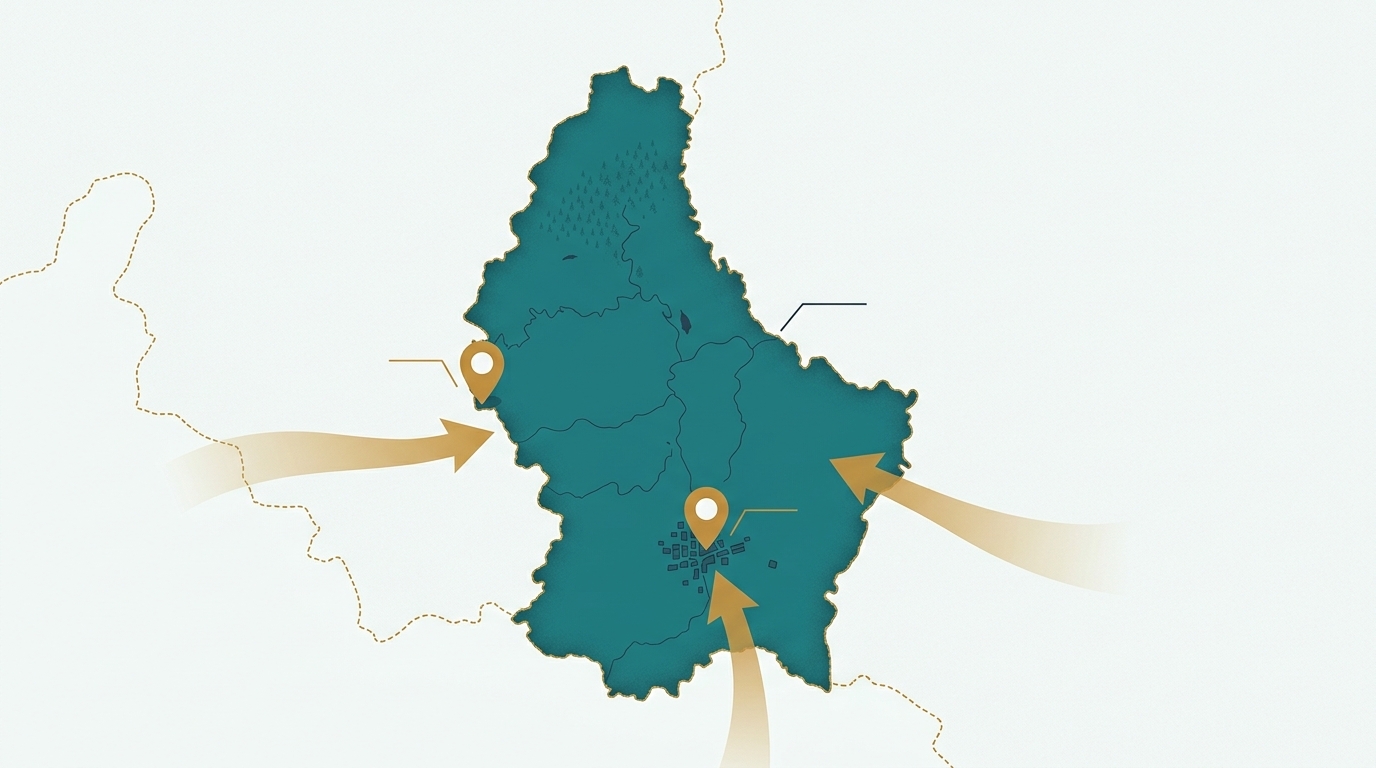
Roughly half of Luxembourg’s workforce commutes from Belgium, France or Germany, so this affects a great many people.
Which System Covers You
Social security follows the place of work, not the place of residence. Working in Luxembourg makes the Caisse nationale de santé your competent institution. Your employer declares you, you receive a Luxembourg social security number, and treatment here is handled exactly as it is for a resident. The rates set out in our guide to dental costs and CNS reimbursement in Luxembourg apply to you in full.
There is no separate cross-border tariff. A filling costs a French frontalier the same as it costs someone living in Limpertsberg, and reimburses identically.
Getting Covered at Home Too: the S1 Form
You also need healthcare where you live, and EU coordination rules provide for it.
The CNS issues an S1 form, a certificate of entitlement, once your employment is declared. You register that form with your local health fund: the CPAM in France, a mutualité in Belgium, or your Krankenkasse in Germany. Once registered, you can receive care at home and have it handled by that fund.
The crucial detail, and the one that determines your dental bills: treatment received in your country of residence is reimbursed by that country, at its rates, under its rules. Luxembourg’s 88% does not travel with you across the border.
Why This Matters More for Dentistry Than Anything Else
For a GP consultation, the practical difference between the four systems is small. For dentistry it can be substantial, because prosthetic and orthodontic reimbursement is where national systems diverge most sharply.
The same crown can leave you with quite different out-of-pocket costs depending on which side of the border it is fitted, and the difference does not always run in the direction people assume. Nor is it consistent across treatment types: a system that reimburses a crown generously may reimburse an implant not at all.
[VERIFY: do not publish a country-by-country comparison table of Belgian, French and German dental reimbursement rates without checking each national fund’s current published figures. Rates change annually and vary by contract type.]
The practical advice we give patients is simple. If you are facing significant prosthetic or implant work and you genuinely have a choice of country, get a written quote in both, and compare what you pay after reimbursement rather than comparing invoice totals. The answer varies enough by case that we would not want to generalise.
Rules That Still Apply to You in Luxembourg
Being a cross-border worker does not change how Luxembourg’s dental rules operate. Three in particular are worth knowing:
- The preventive check-up condition. The 20% personal contribution on prostheses is waived if you attended a dentist for a preventive check-up in each of the two calendar years before delivery. Keeping up with regular check-ups protects that entitlement. [VERIFY: confirm with the CNS whether check-ups performed abroad count towards this condition]
- Prior authorisation. Prosthetic and orthodontic work needs a quote submitted to the CNS, and in most cases approval from the medical inspectorate before treatment starts.
- Payment on the day. You pay your dentist in full at the end of the appointment and claim afterwards, the same as everyone else.
Family Members
Dependants of a cross-border worker are generally co-insured through the same affiliation, which matters for families because children under 18 are reimbursed at 100% for general dental care and orthodontic treatment begun before age 17. If you are weighing up where to have a child’s orthodontic treatment carried out, that 100% rate is a significant factor, and the Luxembourg age condition is strict. Our paediatric dentistry team sees a lot of cross-border families for exactly this reason.
[VERIFY: confirm co-insurance rules for dependants where the other parent works in the country of residence, as dual-affiliation situations follow specific priority rules]
When to See a Dentist About This
If you have recently started working in Luxembourg, book a check-up here once your affiliation is active. It puts a Luxembourg dental record in place, starts the clock on the two-year preventive condition, and gives you a baseline before any larger treatment becomes necessary.
If you already have a treatment plan from a dentist at home and are wondering whether to have the work done here instead, bring it in. We can tell you how it would be quoted and reimbursed under Luxembourg rules so you have a real comparison.
Related Questions
Do I need to choose between Luxembourg and my home country for dental care?
No. With an S1 registered at home you are entitled to care in both. What changes is which fund reimburses you and at what rate: Luxembourg treatment under CNS rules, home treatment under your local fund’s rules.
Are my children covered if I am a cross-border worker?
Dependants are generally co-insured through your Luxembourg affiliation, giving access to the 100% reimbursement rate for under-18s. Where the other parent is insured in your country of residence, priority rules decide which system applies first. Check your specific situation with the CNS.
Can I claim Luxembourg rates for treatment I had at home?
Generally no. Treatment received in your country of residence is reimbursed by that country according to its own rates and terms, not Luxembourg’s. This is the single most misunderstood point about cross-border healthcare.
Book at Steinfort or Limpertsberg
Our Steinfort clinic at 71 Rue de Luxembourg, L-8440 is a short drive from the Belgian border, and our Limpertsberg clinic at 55-57 Av. Pasteur, L-2311 is convenient if you work in the city. Call +352 20 29 64 00 or book online.
This article provides general information about cross-border healthcare entitlements and is not a substitute for a personal dental consultation or for advice from the CNS or your national health fund. Coordination rules and reimbursement rates change; confirm your own situation with the relevant institutions.

Dr. Talpa is a licensed dentist with 12 years of clinical experience and owner of Advanced Smile Dental Care. Dedicated to making dental health information accessible, Dr. Talpa writes to help readers make informed decisions about their oral care. With a background in general and cosmetic dentistry, Dr. Talpa is passionate about translating complex dental topics into practical advice. When not treating patients, Dr. Talpa enjoys staying current with the latest advances in dental science and technology.