

What is Root Canal Treatment
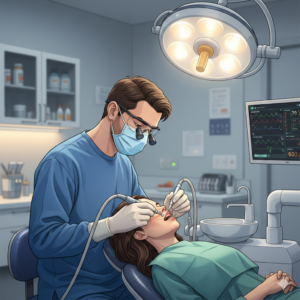
Root canal treatment, also called endodontic therapy, is a dental procedure that removes infected or inflamed pulp from inside your tooth, cleans and disinfects the canal system, and then fills and seals the space to prevent re-infection. The procedure is performed when the pulp (the soft tissue inside your tooth containing nerves and blood vessels) becomes severely infected or inflamed due to deep decay, trauma, or repeated dental procedures.
In simple terms: Your dentist removes the diseased pulp, cleans out the infection, and seals your tooth so it can function normally again—all while saving your natural tooth instead of extracting it.
Essential Facts
What happens: A dentist or endodontist opens your tooth, removes infected pulp tissue, cleans and shapes the root canals with special instruments, fills them with a rubber-like material (gutta-percha), and seals the access opening.
Why you might need it: Deep tooth decay, trauma to the tooth, repeated dental procedures, or gum disease can cause pulp infection or inflammation that creates pain and threatens tooth loss.
How long it takes: 90 minutes to 2 hours for most teeth (single-canal teeth are faster; multi-canal molars take longer).
Recovery: Most people return to normal activities the next day, though mild tenderness may last a few days.
Success rate: Over 90 percent of root canal treatments are successful.
What is the Pulp and Why Does It Matter?
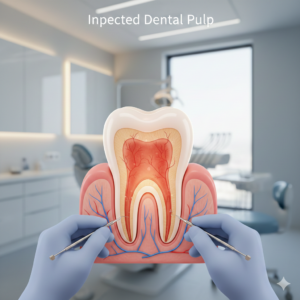
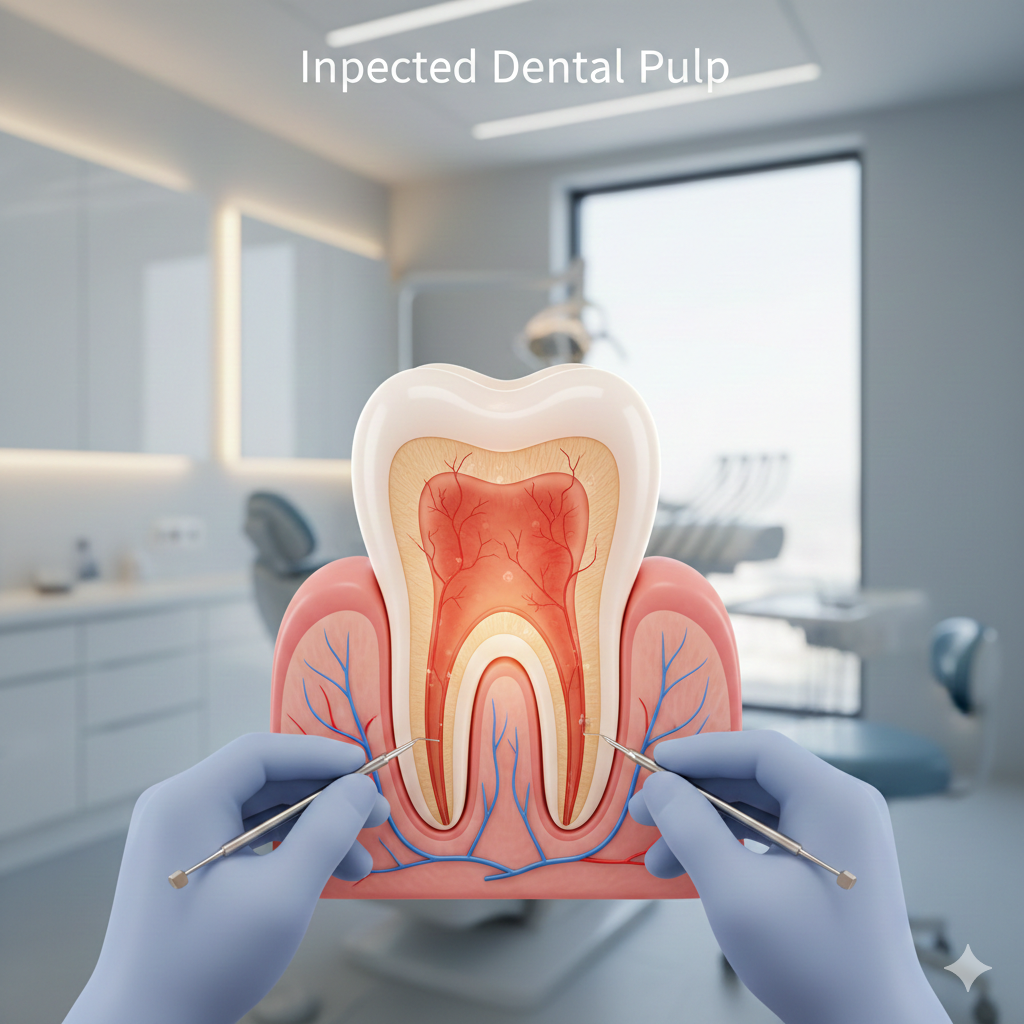
Your tooth consists of multiple layers:
- Enamel – Hard, white outer layer that protects the tooth
- Dentin – Layer beneath enamel that’s softer and more sensitive
- Pulp chamber – Cavity inside your tooth containing the pulp
- Pulp – Soft tissue with blood vessels and nerves
The pulp helps your tooth develop while it’s growing. Once your tooth is fully mature, it can survive without the pulp because the surrounding tissues provide nourishment.
However, when bacteria and decay reach the pulp chamber, they cause inflammation and infection. This creates pressure inside the tooth, leading to:
- Severe pain
- Tooth sensitivity to temperature
- Swelling of the gum
- Formation of an abscess (pus pocket)
- Potential spread of infection to the jawbone or sinuses
This is why root canal treatment is necessary: The infection must be removed before it causes permanent damage to your tooth or spreads to surrounding tissues.
What MEDICAL CONDITIONS require RCT
Common Reasons for Root Canal Treatment
- Deep Tooth Decay
- Cavities that go untreated penetrate deeper into the tooth
- Eventually bacteria reach the pulp chamber
- The longer a cavity exists, the more likely it will reach the pulp
- Even small cavities can lead to pulp damage over months or years
- Tooth Trauma or Injury
- A crack, chip, or blow to the tooth from sports injuries or accidents
- Trauma can damage nerves and blood vessels inside the tooth
- Damage may not show symptoms immediately (delayed pulp death)
- Symptoms can appear weeks or months after the injury
- Repeated Dental Procedures
- Multiple fillings, crowns, or restorations on the same tooth
- Cumulative stress damages the pulp over time
- Each procedure creates irritation and heat that affects the pulp
- Gum Disease and Periodontitis
- Advanced gum disease (periodontitis) allows bacteria to migrate toward the roots
- Bacteria can travel down to the pulp chamber
- Treating gum disease early prevents pulp involvement
- Professional periodontology treatment and prevention are essential
- Cracks or Chips in the Tooth
- Cracks expose the pulp chamber or allow bacteria entry
- Cracked teeth are prone to re-cracking and further damage
- Without treatment, bacteria contaminate the pulp
What SYMPTOMS should I look for?
If you experience any of these symptoms, contact your dentist promptly:
Severe Pain
- Sharp, shooting pain when biting or chewing
- Constant dull ache in the tooth or jaw
- Throbbing or pulsating pain
- Pain that wakes you at night
- Pain unresponsive to over-the-counter pain relievers
Prolonged Temperature Sensitivity
- Sensitivity to hot or cold that lingers after the stimulus is removed
- Normal sensitivity fades quickly; pulp inflammation causes prolonged sensitivity
- Sharp pain with hot or cold foods and beverages
Tooth Discoloration
- Tooth appears gray, brown, or black compared to other teeth
- Darkening indicates pulp death or internal bleeding
- Develops gradually over time
Gum Swelling and Tenderness
- Swelling in gums near the affected tooth
- Pimple-like bump on the gum above the tooth
- Abscess that may drain (you might taste pus)
- Tender to touch
Other Warning Signs
- Visible decay or deep cavity
- Recurring swelling that goes away and returns
- Trauma or injury to the tooth
- Persistent bad taste in your mouth
Steps of Root Canal Treatment Procedure
Step 1: Evaluation and Diagnosis
What happens:
- Your dentist examines the tooth and takes X-rays to confirm pulp damage
- Additional imaging may include 3D radiography (CBCT) for complex cases
- Your dentist tests tooth vitality to assess nerve damage
- Tooth anatomy is evaluated to determine treatment complexity
Why it matters:
- Confirms whether root canal treatment is necessary
- Identifies how many canals need treatment (teeth have 1-4 canals)
- Detects anatomy variations that affect treatment planning
- Early detection of issues improves success rates
Time: 15-30 minutes
Step 2: Local Anesthesia
What happens:
- Your dentist applies numbing gel to the gum first
- A local anesthetic injection numbs the tooth and surrounding area
- The tooth is completely numb before any treatment begins
- You remain awake throughout the procedure
Why it matters:
- Complete numbness prevents pain during treatment
- You may feel pressure and vibration, but not pain
- If you’re anxious, your dentist can discuss sedation options
- Anxiety about pain is common, but modern anesthesia makes the procedure comfortable
Time: 5-10 minutes
Step 3: Isolation with Rubber Dam
What happens:
- A small rubber sheet (rubber dam) is placed around your tooth
- The rubber dam isolates the tooth from the rest of your mouth
- A metal clamp holds the dam in place
- Keeps your tooth dry and prevents contamination
Why it matters:
- Keeps the tooth dry so the dentist can see clearly
- Prevents saliva and bacteria from entering the tooth
- Protects your mouth from irritating solutions and instruments
- Improves treatment success by maintaining a sterile field
Time: 5 minutes
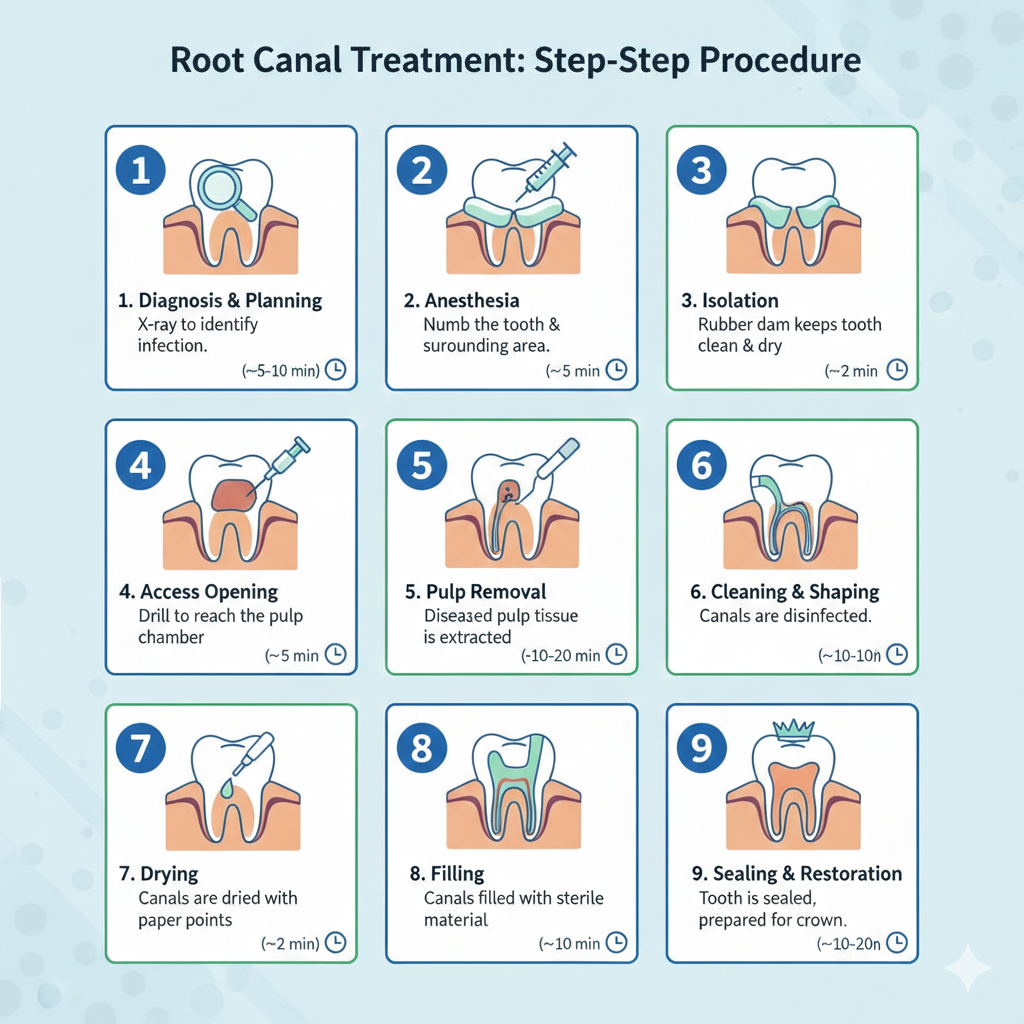
Step 4: Pulp Chamber Access
What happens:
- Your dentist creates an opening in the crown of the tooth
- The opening is positioned to access the pulp chamber
- Different teeth require different access positions (front teeth need a different approach than molars)
- The access hole is carefully planned to preserve as much tooth structure as possible
Why it matters:
- Provides access to the infected pulp tissue
- Determines how much tooth structure is removed
- Affects the final restoration needed afterward
- Careful planning preserves maximum tooth strength
Time: 10-15 minutes
Step 5: Pulp Removal (Pulp Extirpation)
What happens:
- Your dentist uses specialized instruments called files to remove infected pulp tissue
- Files are placed into the pulp chamber and root canals
- The pulp tissue is extracted carefully
- All inflamed and infected tissue must be completely removed
- Small instruments (files) of increasing size are used progressively
Why it matters:
- Removes the source of infection and pain
- Complete removal prevents re-infection
- This is the core of root canal treatment
- Proper technique reduces complications and improves healing
Time: 15-20 minutes
Step 6: Cleaning and Shaping the Root Canals
What happens:
- Root canals are cleaned thoroughly with files
- Each file is larger than the previous one, progressively shaping the canal
- The canals are cleaned from the pulp chamber to the root tip
- Antimicrobial solutions (sodium hypochlorite) are continuously flushed through the canals
- Solutions kill remaining bacteria and dissolve tissue remnants
- The process continues until the canals are completely clean
Why it matters:
- Complete cleaning prevents re-infection
- Proper shaping allows complete filling and sealing
- Antimicrobial solutions eliminate bacteria your dentist can’t mechanically remove
- Thorough irrigation is as important as mechanical cleaning
- This combination is far more effective than either method alone
Time: 20-30 minutes (longest part of the procedure)
Step 7: Drying the Root Canals
What happens:
- After cleaning and irrigation, the canals must be dried completely
- Paper points (small absorbent sticks) are placed into the canals
- Paper points absorb remaining moisture
- The canals are dried with air or alternative methods
- Moisture is removed from the entire length of the canals
Why it matters:
- Gutta-percha (filling material) must be placed in dry canals
- Moisture compromises the seal and causes re-infection
- Complete drying ensures filling material bonds properly
- A proper seal is essential for long-term success
Time: 5-10 minutes
Step 8: Filling the Root Canals
What happens:
- The canals are filled with gutta-percha, a rubber-like biocompatible material
- A sealer cement is applied with the gutta-percha
- Gutta-percha is heated and compressed to fill the canals completely
- The filling extends from the pulp chamber to the root tip
- X-rays confirm the filling reaches the correct depth
Why it matters:
- Gutta-percha seals the canal space and prevents bacteria entry
- The sealer cement ensures a complete, lasting seal
- Gutta-percha has been used successfully for over 100 years
- Proper filling and sealing are critical for treatment success
- Under-filling leaves space for bacteria to survive
- Over-filling can irritate tissues outside the root tip
Time: 10-15 minutes
Step 9: Sealing the Access Opening
What happens:
- The access hole is sealed with a temporary or permanent restoration
- A temporary filling may be placed if a second appointment is needed
- If permanent restoration is placed immediately, a composite or glass ionomer filling is used
- The seal must be complete to prevent bacterial entry
Why it matters:
- Seals the canal system from saliva and bacteria
- Prevents re-infection after treatment
- A temporary filling is not designed to last long
- The seal must be maintained until final restoration
Time: 5-10 minutes
Total Treatment Time: 90 Minutes to 2 Hours
Factors Affecting Duration:
- Single-canal teeth (front teeth): Faster, typically 90 minutes
- Multi-canal teeth (molars): Slower, typically 120 minutes
- Severely calcified canals: May require additional time
- Complex anatomy: May require extended appointment or second visit
- Patient anxiety requiring breaks: May extend appointment
Root Canal Treatment vs. Tooth Extraction: Which is Better?
Why Save Your Natural Tooth?
Your Natural Tooth Functions Better
- Natural teeth have roots that stimulate jawbone
- Bite force and sensation are preserved
- Appearance is natural and unchanged
- No adaptation period needed
Bone Preservation
- When you extract a tooth, the root no longer stimulates the jawbone
- Bone gradually deteriorates (resorbs) over time
- Significant bone loss can occur within the first year
- Continued bone loss changes your facial appearance and makes you look older
- Remaining teeth can shift, causing alignment and bite problems
Long-Term Outcomes
- Natural teeth with root canal treatment last decades
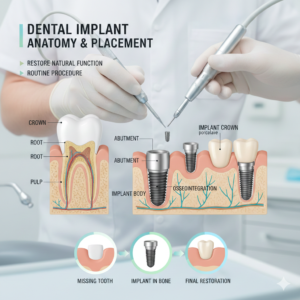
- Implants require ongoing maintenance
- Bridges require replacing every 5-15 years
- Dentures require continuous adjustment
Why Extraction is Not Preferred:
- Permanent loss of natural tooth structure
- Irreversible bone loss affecting your appearance and remaining teeth
- Significantly higher cost for replacement
- Replacement options never function exactly like natural teeth
- More complex treatment path than preserving the original tooth
When Extraction Might Be Necessary
Some teeth cannot be saved:
- Severe vertical root fractures that extend below the gum line
- Teeth with broken roots that cannot be treated
- Severely compromised teeth with inadequate remaining structure
- Teeth with hopeless prognosis after previous failed treatments
- Teeth with extensive bone loss from periodontal disease

Recovery After Root Canal Treatment
Immediately After Treatment
What to Expect:
- Your mouth may feel numb for 2-4 hours
- Slight tenderness around the tooth is normal
- You might feel a “bruised” sensation in the jaw
- The treated tooth may feel slightly different or slightly high when biting
- Mild swelling may develop over the next day
Pain Management:
- Over-the-counter pain relievers (ibuprofen, acetaminophen) are usually sufficient
- Avoid chewing on the treated tooth
- Apply ice packs for the first 24 hours to reduce swelling
- Most tenderness resolves within a few days
Return to Normal:
- You can return to normal activities the next day
- Avoid strenuous exercise for 1-2 days
- Stick to soft foods while the tooth is tender
- Resume normal diet once tenderness diminishes
First Week After Treatment
Days 1-3:
- Mild discomfort is normal; severe pain suggests a problem
- Pain should decrease each day
- Continue pain management as needed
- Avoid chewing on the treated tooth
- Maintain gentle oral hygiene
Days 4-7:
- Tenderness typically resolves
- Tooth sensitivity may persist but diminishes
- Restore normal diet slowly as comfort improves
- Continue avoiding chewing on the treated tooth
Weeks 2-4: Scheduling Permanent Restoration
Critical: Schedule your permanent restoration appointment immediately after root canal treatment
Why urgency matters:
- Temporary fillings are not designed to last
- Without a permanent restoration, bacteria can re-enter the sealed canals
- Re-infection can occur and require retreatment
- A crown protects the tooth from fracturing (teeth without pulp are more fragile)
- Most permanent restorations should be placed within 2-4 weeks
Restoration options:
- Crown (most common, provides maximum protection)
- Large filling (if minimal tooth structure was removed)
- Inlay or onlay (for moderate-sized cavities)
- Your dentist will recommend the best option based on remaining tooth structure
Complete Healing: Months 1-6
Bone Healing:
- Bone surrounding the root tip continues healing for several months
- X-rays taken after 6-12 months show bone regeneration
- Healing is typically complete by 6 months
- Some teeth may take 12 months for complete healing
Tooth Function:
- By 4-6 weeks, the tooth functions normally
- Once the crown is placed, full function is restored
- Bite force returns to normal
- No activity restrictions after healing
When to Seek Additional Care:
- If swelling worsens after several days
- If fever develops
- If severe pain develops days after treatment
- If the temporary filling falls out
- These symptoms suggest complications requiring evaluation
How to Avoid Needing Root Canal Treatment
Excellent Oral Hygiene
Daily brushing and flossing:
- Brush twice daily with fluoride toothpaste
- Floss once daily to remove plaque between teeth
- Use proper technique: gentle, circular motions
- Aggressive scrubbing damages gum tissue
Why it matters:
- Removes plaque and bacteria before they cause decay
- Prevents tartar buildup that leads to gum disease
- Reduces cavity formation significantly
- Healthy gums prevent bacteria from reaching pulp
Regular Professional Care
Schedule dental appointments:
- Visit your dentist every 6 months for cleanings and exams
- Professional cleaning removes tartar that brushing cannot
- Early cavity detection prevents pulp involvement
- Gum disease is identified and treated early
- Small problems are fixed before they become large ones
Why it matters:
- Small cavities caught early need simple fillings
- Late-stage cavities may need root canal treatment
- Gum disease treatment prevents pulp damage
- Regular monitoring prevents emergencies
Dietary Choices
Limit sugary foods and drinks:
- Bacteria feed on sugar and produce acids
- Acid attacks enamel and creates cavities
- Each time you consume sugar, you create an acidic environment that lasts 20+ minutes
- Frequent sugar consumption means constant acid attack
Specific recommendations:
- Avoid sticky candies, caramel, and gum
- Limit soda, sports drinks, and sugary drinks
- Drink water instead of sugary beverages
- If you consume sweets, rinse your mouth with water afterward
- Drink fluoridated water to strengthen enamel
Why it matters:
- Diet is a major factor in cavity formation
- Reducing sugar significantly reduces cavity risk
- Prevents deep decay that reaches the pulp
- Supports overall oral health
Protect Your Teeth from Trauma
Prevent tooth injuries:
- Wear a mouth guard during contact sports
- Avoid using teeth to open bottles or packages
- Don’t chew hard candies, ice, or popcorn kernels
- Be careful with hard foods that can crack teeth
- Avoid activities that risk tooth injury
Why it matters:
- Cracked or fractured teeth often need root canal treatment
- Trauma can damage the pulp even if the damage isn’t visible
- Prevention is far easier than treatment
- Sports injuries account for many traumatic tooth injuries
Manage Gum Disease Immediately
Recognize early signs:
- Bleeding gums while brushing
- Gum swelling or redness
- Bad breath
- Gum recession
- Loose teeth
Seek professional treatment:
- Contact your dentist at the first sign of gum problems
- Professional cleaning may be needed
- Advanced periodontal treatment is available for serious cases
- Treating gum disease early prevents pulp involvement
- Healthy gums protect your entire mouth
Address Dental Problems Promptly
Seek care for:
- Cavities (filled before they reach the pulp)
- Cracked or chipped teeth
- Tooth pain (investigate the cause immediately)
- Signs of infection (swelling, pus, bad taste)
- Trauma to teeth from injuries
Why urgency matters:
- Early intervention prevents pulp damage
- Small problems become large ones if ignored
- Untreated infections spread and worsen
- Root canal treatment is more likely if problems go untreated
FAQ: Common Questions About Root Canal Treatment
Q: Is root canal treatment painful?
A: Modern root canal treatment is no more painful than having a filling placed. Local anesthesia numbs the tooth completely, so you experience pressure and vibration but not pain during the procedure. The pain you felt before treatment came from the infected pulp, not from the treatment itself. In fact, root canal treatment relieves the pain caused by the infection. Your dentist will ensure complete numbness before beginning, and you can request sedation if you’re anxious.
Q: How long does root canal treatment take?
A: Most root canal treatments take 90 minutes to 2 hours. Front teeth (incisors and canines) with a single canal typically take 90 minutes. Back teeth (molars) with multiple canals take closer to 2 hours. Some complex cases may require a second appointment. Your dentist will give you a time estimate during your consultation based on your tooth’s anatomy.
Q: Can a tooth with root canal treatment fail?
A: Yes, occasionally root canal treatment must be repeated. Success rates exceed 90 percent, but failure can occur if the original filling didn’t seal completely, a new cavity develops and bacteria enter the canals, the tooth cracks and becomes contaminated, or the tooth fractured. If retreatment is necessary, your endodontist can often save the tooth. A crown placed after root canal treatment significantly improves long-term success.
Q: What’s the difference between root canal treatment and extraction?
A: Extraction removes the entire tooth, while root canal treatment saves your natural tooth. Extraction leads to bone loss in the jaw, requiring an implant, bridge, or denture to replace the tooth. Root canal treatment preserves your natural tooth, maintains jawbone structure, and costs significantly less than replacement options. Your natural tooth always functions better than any replacement.
Q: Do I need a crown after root canal treatment?
A: Most teeth that undergo root canal treatment require a crown. Teeth become more fragile after root canal treatment because they no longer contain the pulp with its blood vessels. A crown protects the tooth from fracturing during chewing. A crown also restores the tooth’s appearance, strength, and full function. Your dentist will discuss restoration options based on how much tooth structure remains.
Q: Can root canal treatment be done in one visit?
A: Some teeth can be treated in one appointment, particularly if the tooth anatomy is straightforward and the infection isn’t severe. More complex cases or severe infections might require two appointments: one for cleaning and shaping, another for filling after the tooth has rested and the infection has been controlled. Your dentist will discuss the treatment timeline based on your specific situation.
Q: What if I delay root canal treatment?
A: Delaying treatment allows the infection to worsen and spread. An untreated tooth infection can develop into an abscess, compromise the surrounding bone and teeth, and occasionally spread to other areas of your head and body (rare but possible). The longer you wait, the more complex your treatment becomes and the greater the risk of tooth loss. Seeking prompt treatment gives you the best chance of saving your tooth.
Q: Is there an alternative to root canal treatment?
A: For teeth with severely infected or damaged pulp, root canal treatment is usually the only option besides extraction. Prevention and early intervention with fillings are better alternatives when caught early. If you’re concerned about a tooth, see your dentist immediately for evaluation. Early cavities need fillings, not root canals. Only when pulp is affected does root canal treatment become necessary.
Q: Can I see an endodontist or should I see my general dentist?
A: Your general dentist can perform many root canal treatments successfully. Endodontists are specialists with additional training specifically in treating pulp diseases and root canal therapy. You might be referred to an endodontist if your tooth has complex anatomy, a severely curved root, your previous root canal failed, or if you want specialized expertise. Endodontists have advanced equipment and techniques that allow them to handle difficult cases.
Supporting Your Overall Oral Health
Root canal treatment addresses a specific problem, but comprehensive dental health requires a holistic approach:
Manage gum disease: Professional periodontology treatment and improved home care protect your teeth’s roots. Healthy gums provide a sealed barrier against bacteria and maintain the bone supporting your teeth. Advanced periodontal treatment is available for serious cases.
Regular professional care: Combine root canal treatment with professional cleanings and exams every 6 months. Fluoride treatments and dental sealants provide additional protection against decay.
Prevention focus: Excellent oral hygiene, dietary choices, and trauma prevention protect all your teeth. Prevention is always preferable to treatment.
Comprehensive approach: When you combine root canal treatment with prevention, regular professional care, and management of gum disease, you maximize the longevity of your treated tooth and protect your overall oral health.
Final Thoughts
Root canal treatment is a highly successful procedure that saves teeth that would otherwise need extraction. Modern techniques, anesthesia, and technology have made the procedure comfortable and efficient, with success rates exceeding 90 percent. If you’re experiencing severe tooth pain or have been told you need root canal treatment, don’t delay seeking professional evaluation.
Understanding what root canal treatment involves, recognizing the symptoms that indicate you might need it, and seeking prompt professional care helps you make informed decisions about your dental health. Your natural tooth, even with root canal treatment, is always preferable to any replacement option.
Taking a proactive approach to oral health through prevention, regular dental visits, and prompt treatment of problems helps you avoid needing root canal treatment in the first place. But if you do need this procedure, modern dentistry offers highly successful treatment that preserves your natural tooth and returns you to comfortable, pain-free function.