

If you are affiliated to Luxembourg social security, the CNS reimburses most general dental care at 88% of official tariffs for adults and 100% for children under 18. Dental prostheses are covered at 80%, rising to 100% if you have had a preventive check-up in each of the two previous calendar years.
That is the short version. The longer version is where patients get caught out, because the reimbursement rate is only one part of what you actually pay. The official tariff matters. The annual allowance matters. Whether your treatment needs prior authorisation matters, and so does whether your dentist is allowed to charge above the official rate.
This guide walks through all of it in plain English, with the rules taken directly from the Caisse nationale de santé. We wrote it because most English-language dental cost information available in Luxembourg is either written for the UK and US, or written by insurance brokers who want to sell you a policy.
How Dental Reimbursement Works in Luxembourg
Luxembourg does not work like the NHS, and it does not work like private American dental insurance either. It works on reimbursement.
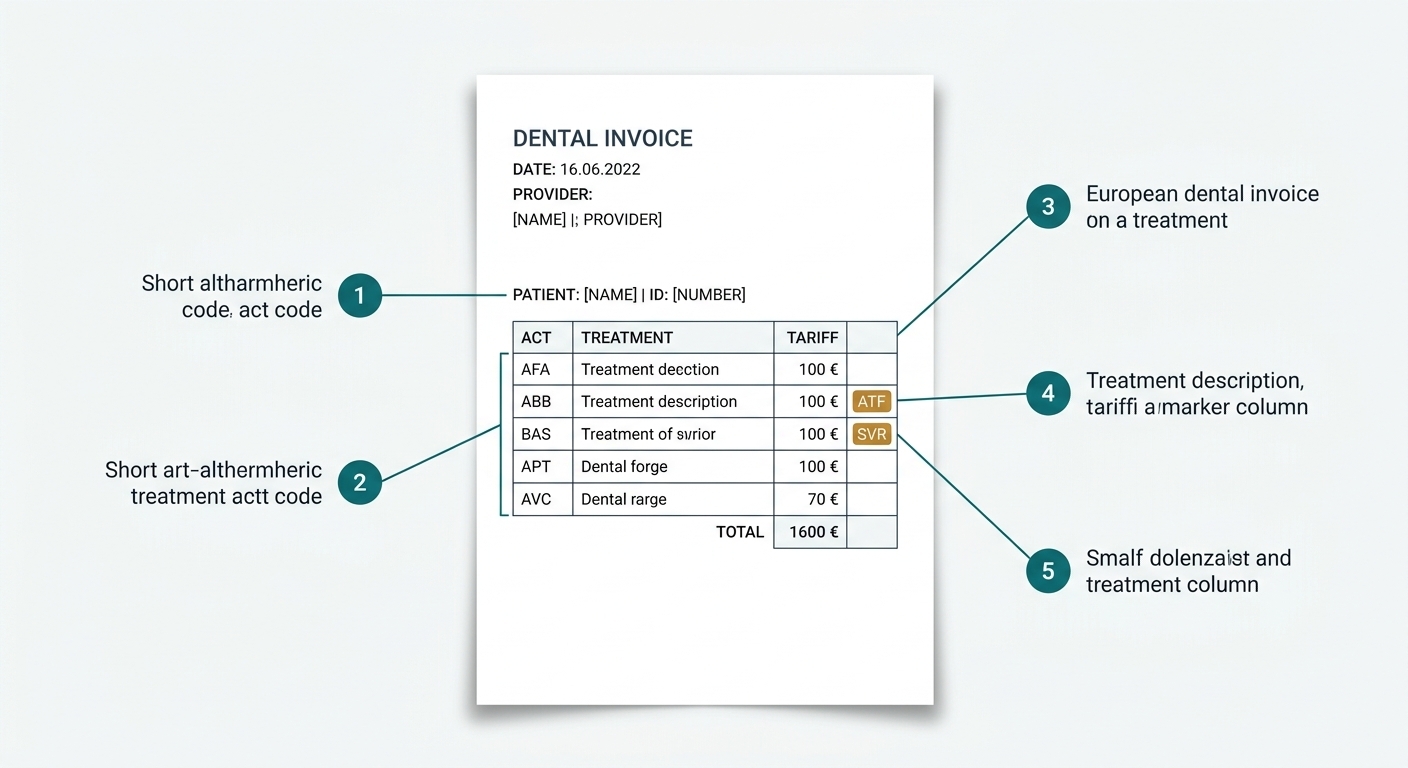
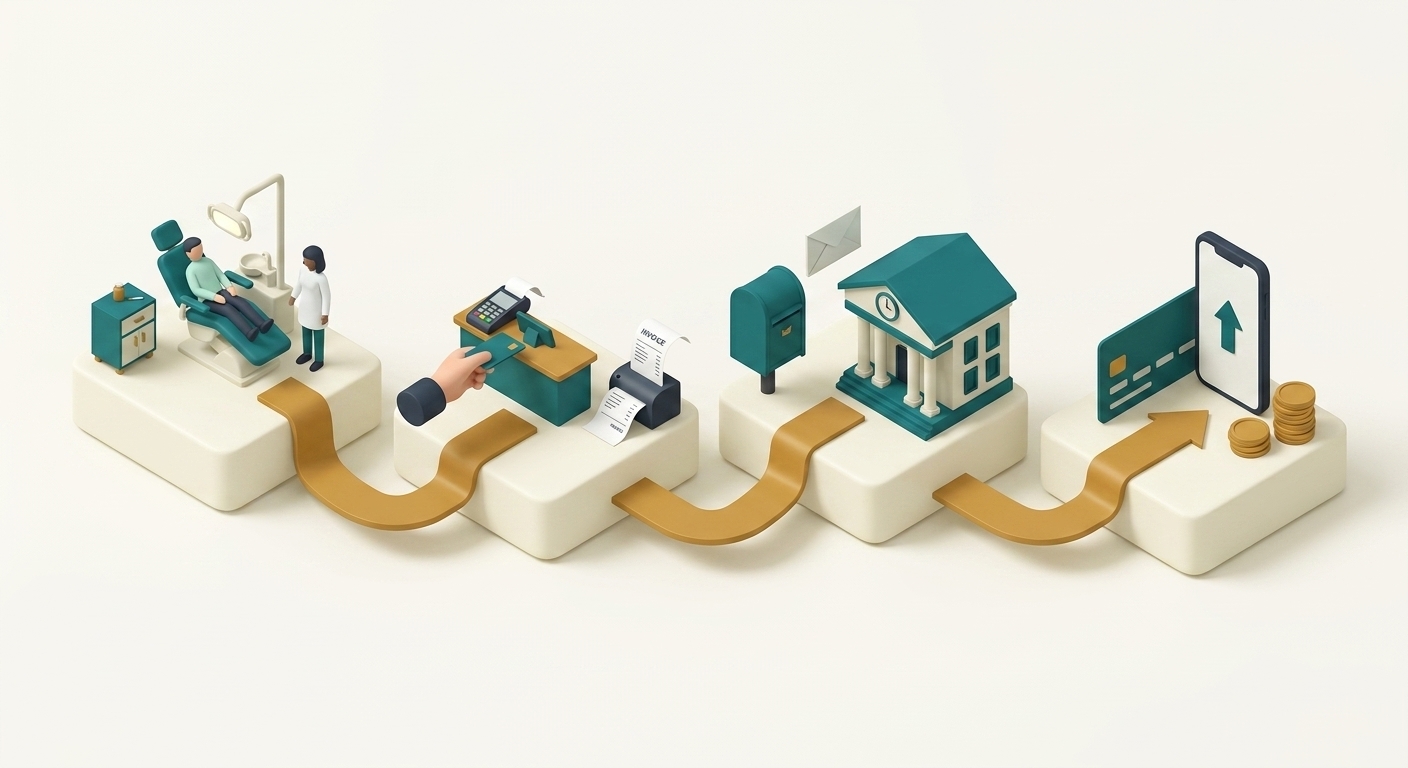
You attend your appointment. You pay your dentist directly at the end of it. You then submit the invoice to the CNS, which pays you back a percentage of the official tariff for each act performed. Every dental procedure in the country has a code and an official price, set out in the dentists’ nomenclature, a long PDF that most patients never see but which governs everything about what comes back to you.
Two things follow from this that surprise people who have moved here.
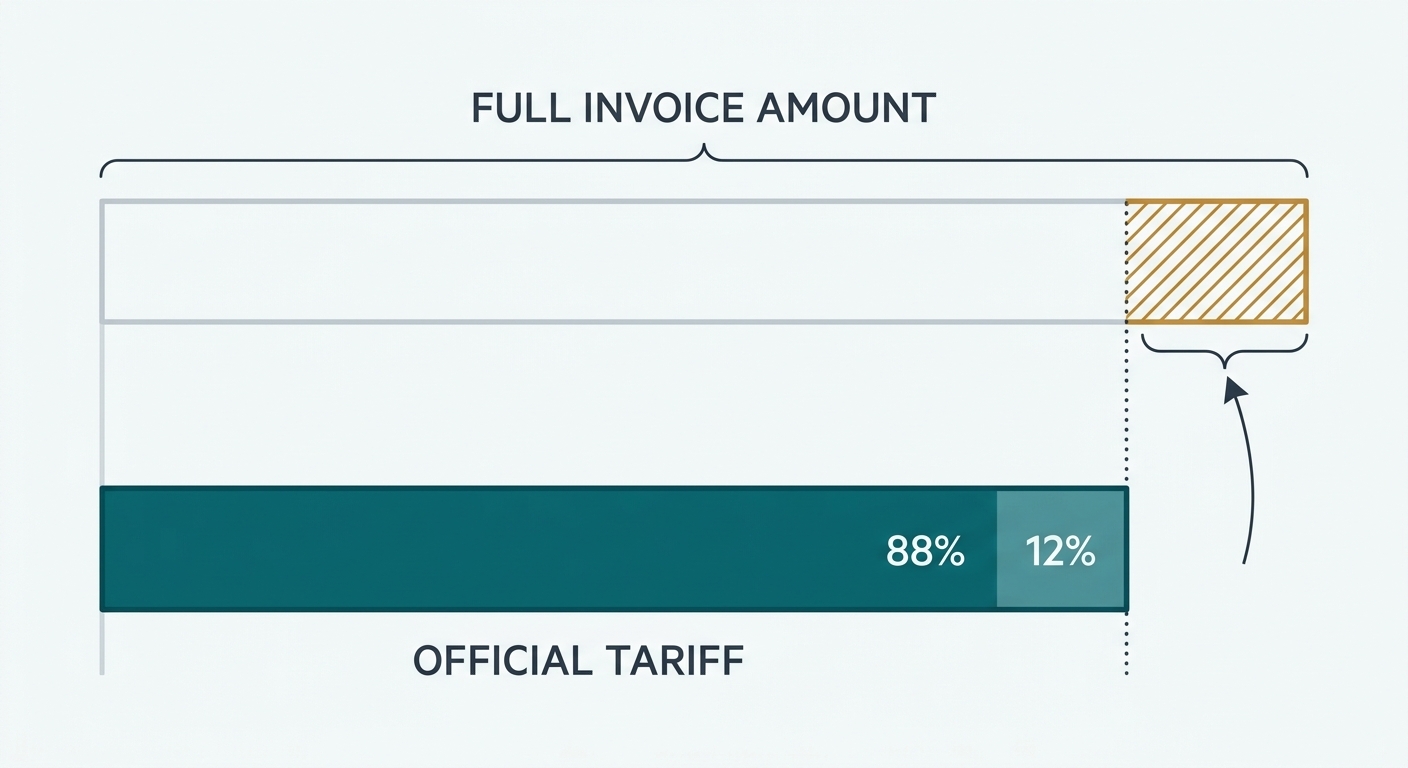
First, you need money available up front. If you are having a crown fitted, you pay the full amount on the day and wait for the reimbursement. Second, the percentage is applied to the official tariff, not to your bill. If a treatment is billed above the official rate, which is permitted in specific circumstances explained further down, the CNS still only reimburses its percentage of the official figure. The difference is yours.
In our Steinfort and Limpertsberg clinics, this is easily the most common source of confusion at the reception desk. Patients see “88%” and reasonably assume they will be paying 12% of whatever the invoice says. For routine care, that is roughly right. For prosthetic work, it often is not. We would rather explain that before treatment than after.
The Reimbursement Rates, Treatment by Treatment
The CNS splits dental care into three categories, each with its own rules. Here is how they break down. For the full act-by-act breakdown, see what dental treatments the CNS covers in Luxembourg.
| Category | Adults (18+) | Children (under 18) | What it includes |
|---|---|---|---|
| General, gum and surgical dental care | 88% of official tariffs | 100% | Consultations, scaling, fillings, root canal treatment, extractions, X-rays, periodontal care, local anaesthesia |
| Dental prostheses (crowns, bridges, dentures) | 80% of official tariffs | 100% | Rises to 100% for adults who meet the preventive-visit condition |
| Orthodontics | 88%, but only if treatment began before age 17 | 100% | Prior authorisation from the CMSS is mandatory |
A few specifics inside those categories set hard limits on frequency:
- Scaling. Since January 2024 there are two separate codes. Conventional scaling (DS1) is reimbursed twice per calendar year. Periodontal scaling (DP41), performed only as part of a periodontal treatment plan, is reimbursed once per calendar year.
- Fixed prostheses such as crowns, bridges and post-retained teeth are renewable every 12 years.
- Removable prostheses are renewable every 5 years.
- X-rays are covered, and cone beam volumetric imaging is reimbursed under certain conditions. If you need 3D dental imaging, ask whether your case meets them before the scan, not after.
Those renewal periods can be shortened by the medical inspectorate in specific situations: maxillofacial bone fracture, a tumour affecting the maxillo-buccal region, very high-dose bisphosphonate treatment, or prosthetic work carried out before the age of 17.
Your Annual Dental Allowance
Every adult affiliated to the CNS gets a fixed annual amount of dental care reimbursed at 100% rather than 88%. It is designed to remove any financial reason not to attend a check-up.
The CNS lists this allowance as 79,22 € on its English-language page, dated 1 May 2025. Its French page still shows 77,35 € from September 2023, and at least one insurance comparison site quotes a higher 2026 figure. [VERIFY: confirm the current forfait annuel with the CNS before publishing, sources disagree and the figure is indexed]
The mechanics matter more than the exact euro amount. The allowance applies to general dental care and orthodontics, but not to prosthetic treatment. It is consumed as you use it. Once it is exhausted for the calendar year, everything after that reverts to the standard 88%. This is why the same procedure can be reimbursed at two different amounts for the same patient in the same year, a discrepancy that generates a lot of phone calls to the CNS every January.
What the CNS Does Not Cover
This is the section most Luxembourg dental websites skip, and it is the one that costs patients the most money when they discover it late.
Dental implants are not reimbursed. The only exceptions are two rare congenital conditions, anodontia and oligodontia, plus certain maxillofacial cases where a bone implant in the skull and face may be covered. For everyone else, an implant is paid entirely out of pocket. The crown that sits on top may fall under prosthetic rules, but the implant itself does not.
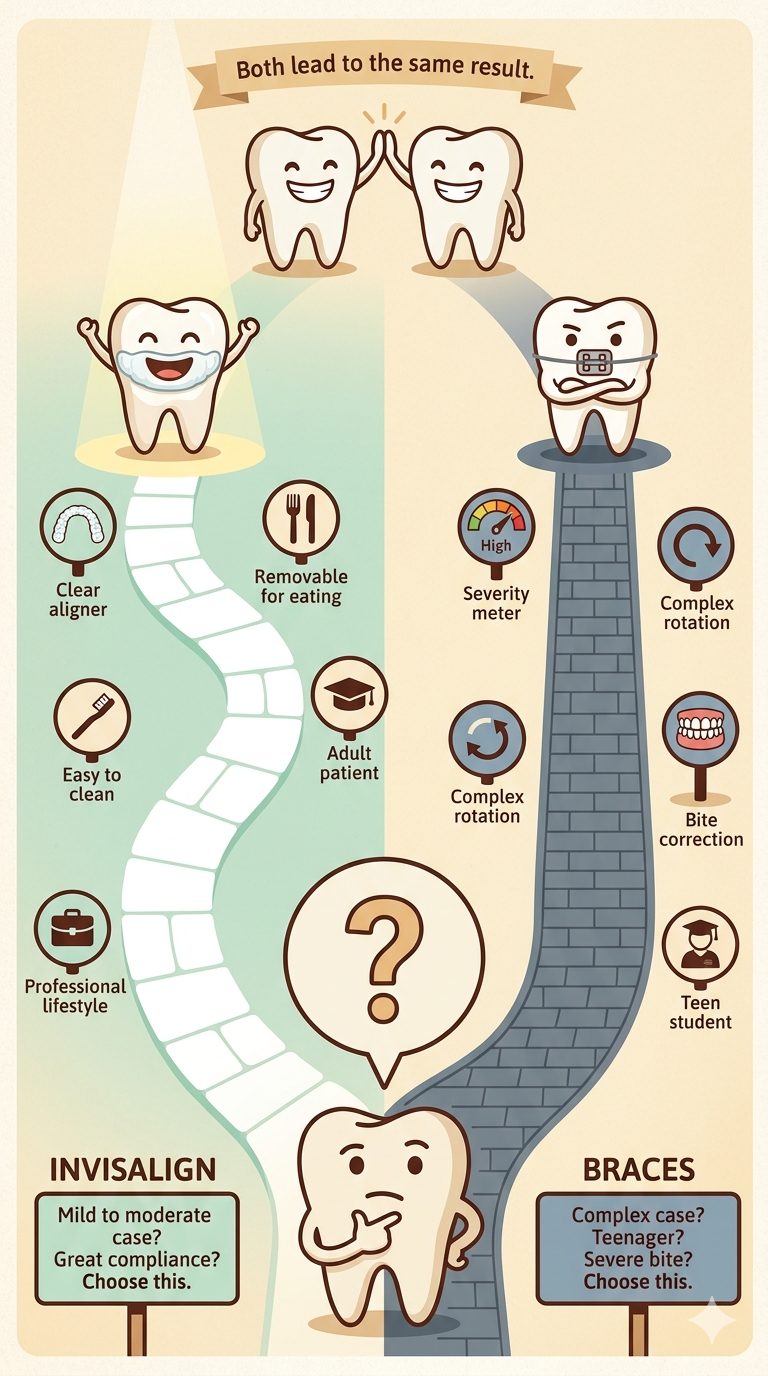
Adult orthodontics is not reimbursed. Treatment is only covered if the appliance is fitted before the patient turns 17. If you are an adult considering braces or clear aligners, budget for the full cost.
Purely cosmetic work is not reimbursed. Teeth whitening and veneers placed for appearance rather than function sit outside the system entirely.
Aesthetic upgrades within covered treatment are not reimbursed. If your child has fixed braces and you choose ceramic or plastic brackets instead of metal for cosmetic reasons, the CNS covers the metal equivalent and you pay the difference.
We say this plainly to patients: if the treatment is about how a tooth looks rather than how it works, assume you are paying for it yourself, and be pleasantly surprised if you are not.
What Dental Treatment Actually Costs
Here is where we have to be careful, and where you should be sceptical of any website that gives you confident round numbers.
Fees for routine dental care in Luxembourg are set by the official nomenclature, so they do not vary much between clinics. Fees for prosthetic and implant work do vary, because those procedures carry the DSD marker explained in the next section, and because laboratory costs, materials and case complexity differ enormously between patients.
Rather than publish invented figures, we would point you to two things. The dentists’ nomenclature PDF linked from the CNS site lists the official tariff for every reimbursable act. And for anything above routine care, you are entitled to a written, itemised quote before treatment begins.
[VERIFY: if TalpaDent wishes to publish an indicative price table for check-ups, scaling, fillings, root canal, crowns and implants, supply the clinic’s own current ranges. Do not estimate.]
What we can tell you honestly is what drives the number up. For prosthetic work: the material, the number of teeth involved, whether preparatory treatment such as an extraction or root canal is needed first, and the technology used to produce the restoration. For implants: bone quality, whether grafting is required, and how many units are being placed.
Quotes, Authorisations and the DSD Rule
Three sets of initials appear on Luxembourg dental paperwork, and they decide whether you get reimbursed at all.
DSD (dépassement sur devis). Certain acts allow the dentist to charge above the official tariff, but only if a detailed written quote has been given to you and you have agreed to it. The rules require the dentist to set these fees “with tact and moderation”. If you are ever presented with a bill above the official rate without having signed a quote first, something has gone wrong.
ACM (autorisation du contrôle médical). These acts are only covered if the Social Security Medical Inspectorate approves them. Most prosthetic work falls here.
APCM (prior authorisation). These acts must be approved before treatment starts. Beginning treatment first and applying afterwards means no reimbursement.
In practice your dentist in Luxembourg submits the quote to the CNS on your behalf. If you need to send it yourself, the address is CNS – Autorisations dentaires – L-2980 Luxembourg. The file is checked administratively by the CNS, then passed to the medical inspectorate for an opinion. If approved, you and your dentist both receive the agreed quote back showing the exact amount that will be reimbursed.
Two timing traps to know about. Authorised orthodontic treatment must begin within 12 months of approval, or you need a fresh authorisation. And at the end of prosthetic treatment you must send the CNS the receipted invoice together with the approved quote. The invoice alone is not enough.
Should You Top Up With Private Cover?
It depends, and it depends on something quite specific: whether the treatment you are likely to need falls into the categories the CNS covers poorly or not at all. We work through the arithmetic in detail in is private dental insurance worth it in Luxembourg.
If your dental history is uneventful and you attend twice a year for check-ups and scaling, CNS cover at 88% plus the annual allowance leaves you with a small residual bill. Complementary cover would probably cost you more in premiums than it returns.
The calculation changes if implants, extensive prosthetic work, or adult orthodontics are on your horizon, precisely the areas where reimbursement is nil or capped. Luxembourg’s mutual health fund, the CMCM, offers dental benefits within its common scheme and a stronger Denta & OptiPlus option, and several private insurers compete alongside it.
Read any policy for three things before signing: the annual ceiling, the waiting period before dental benefits activate, and whether pre-existing conditions are excluded. We have seen patients take out cover in the same month they were told they needed a bridge, only to find the waiting period ran longer than the treatment.
If You Are a Cross-Border Worker
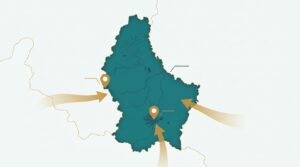
Around half the workforce in Luxembourg commutes from Belgium, France or Germany, so this affects a lot of people. Our dedicated guide covers dental reimbursement for cross-border workers in Luxembourg in full.
If you work in Luxembourg, you are affiliated to Luxembourg social security and the CNS is your competent institution. Treatment you receive in Luxembourg is reimbursed under Luxembourg rules, the same 88% and 80% rates set out above.
For care in your country of residence, you register with your local health fund using the S1 form, which the CNS issues after your employment is declared. Once registered, treatment at home is handled by the local fund according to its rates and rules, not Luxembourg’s. That distinction matters for dentistry, because the three neighbouring systems reimburse dental work quite differently from each other and from Luxembourg.
The practical consequence: the same crown can leave you with meaningfully different out-of-pocket costs depending on which side of the border you have it fitted. If you are weighing that up, get a written quote in both countries before deciding.
What Happens at Your Appointment
Knowing the paperwork in advance takes most of the friction out of a first visit.
- Bring your social security card. Your Luxembourg social security number is what links the invoice to your CNS file.
- Expect to pay on the day. Card or transfer, at the end of the appointment.
- Ask for the itemised invoice, the mémoire d’honoraires. It lists each act with its code. That document is what you submit to the CNS.
- For anything beyond routine care, ask for the quote first. Any treatment marked DSD or ACM should be quoted and, where required, authorised before it starts.
- Submit to the CNS and keep a copy. Reimbursement arrives by bank transfer.
One observation from practice worth passing on. Patients frequently ask us at the consultation whether they should wait until January so a new annual allowance resets. Occasionally that is sensible for elective work. More often the delay costs more than the allowance is worth, because a tooth that needs treating rarely improves while it waits. If you are considering timing treatment around the calendar, ask, because it is a reasonable question and the answer genuinely varies by case. Keeping up with regular preventive appointments is what keeps these decisions small.
Frequently Asked Questions
Fees for consultations and routine care follow the official CNS nomenclature, so they are broadly consistent between clinics. Adults are reimbursed 88% of the official tariff, children under 18 receive 100%, and an annual allowance is reimbursed at 100% until it is used up. You pay in full on the day and claim afterwards.
You pay your dentist directly, then submit the itemised invoice to the CNS. The CNS reimburses a percentage of the official tariff for each coded act: 88% for adult general care, 80% for prostheses, 100% for under-18s. Prosthetic and orthodontic work requires a quote and, in most cases, prior authorisation.
Consultations, scaling, fillings, root canal treatment, extractions, periodontal care, local anaesthesia and dental X-rays are all covered. So are prostheses and children’s orthodontics, subject to authorisation. Implants, adult orthodontics and cosmetic treatments such as whitening and aesthetic veneers are not.
It depends on your likely treatment needs. For routine check-ups and scaling, CNS cover leaves a small residual bill and complementary cover rarely pays for itself. For implants, extensive prosthetic work or adult orthodontics, where CNS cover is nil or capped, it can make a substantial difference. Check ceilings and waiting periods carefully.
Yes. If you work in Luxembourg you are affiliated to the CNS, and dental care received in Luxembourg is reimbursed under Luxembourg rules. For treatment in your country of residence, you register there with the S1 form issued by the CNS, and that care is reimbursed by the local fund at its own rates.
Generally yes. The standard model is that you settle the invoice at the end of the appointment and claim reimbursement from the CNS afterwards. Arrangements allowing the CNS share to be settled directly exist in some circumstances, so it is worth asking your clinic what applies. [VERIFY: confirm whether TalpaDent operates PID / tiers payant]
Dental implants outside rare congenital and maxillofacial exceptions, orthodontic treatment started at or after age 17, teeth whitening, purely cosmetic veneers, and aesthetic upgrades within otherwise covered treatment such as ceramic brackets instead of metal ones.
Headline fees for routine care are tied to the official nomenclature, so comparisons are less straightforward than they look. What differs more is the reimbursement architecture: Belgium, France and Germany each treat prosthetic and orthodontic work differently. Compare the amount you actually pay after reimbursement, not the invoice total.
Talk to Us Before You Commit to Treatment
If you are facing a treatment plan and you are not sure what it will genuinely cost you after reimbursement, bring the quote to us. Working through it properly takes about ten minutes and it is time well spent.
TalpaDent has two clinics: 71 Rue de Luxembourg, L-8440 Steinfort and 55-57 Av. Pasteur, L-2311 Limpertsberg. Call +352 20 29 64 00 or book an appointment online.
This article provides general information about dental reimbursement in Luxembourg and is not a substitute for a personal dental consultation or for advice from the CNS. Reimbursement rules and tariffs change; confirm current figures with the CNS. Every clinical case is assessed individually.

Dr. Talpa is a licensed dentist with 12 years of clinical experience and owner of Advanced Smile Dental Care. Dedicated to making dental health information accessible, Dr. Talpa writes to help readers make informed decisions about their oral care. With a background in general and cosmetic dentistry, Dr. Talpa is passionate about translating complex dental topics into practical advice. When not treating patients, Dr. Talpa enjoys staying current with the latest advances in dental science and technology.