

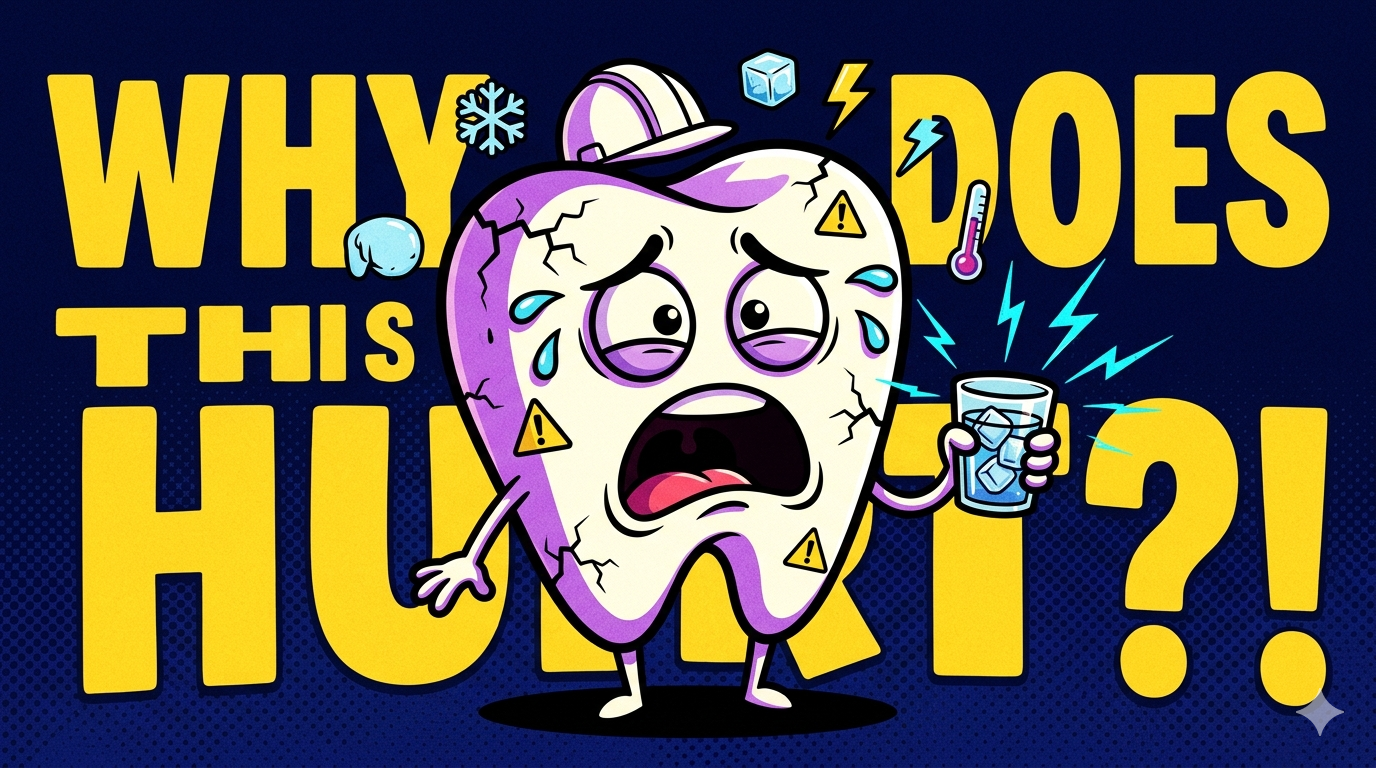
That sudden, sharp sting when you sip ice water or breathe in cold winter air is one of the most common dental complaints in the world yet most people quietly put up with it, assuming it is just part of getting older. It is not. This guide explains exactly why teeth become sensitive to cold, which causes are most common, what you can do at home right now, and when it is time to see a dentist.
What Is Tooth Sensitivity to Cold, and Why Does It Happen?
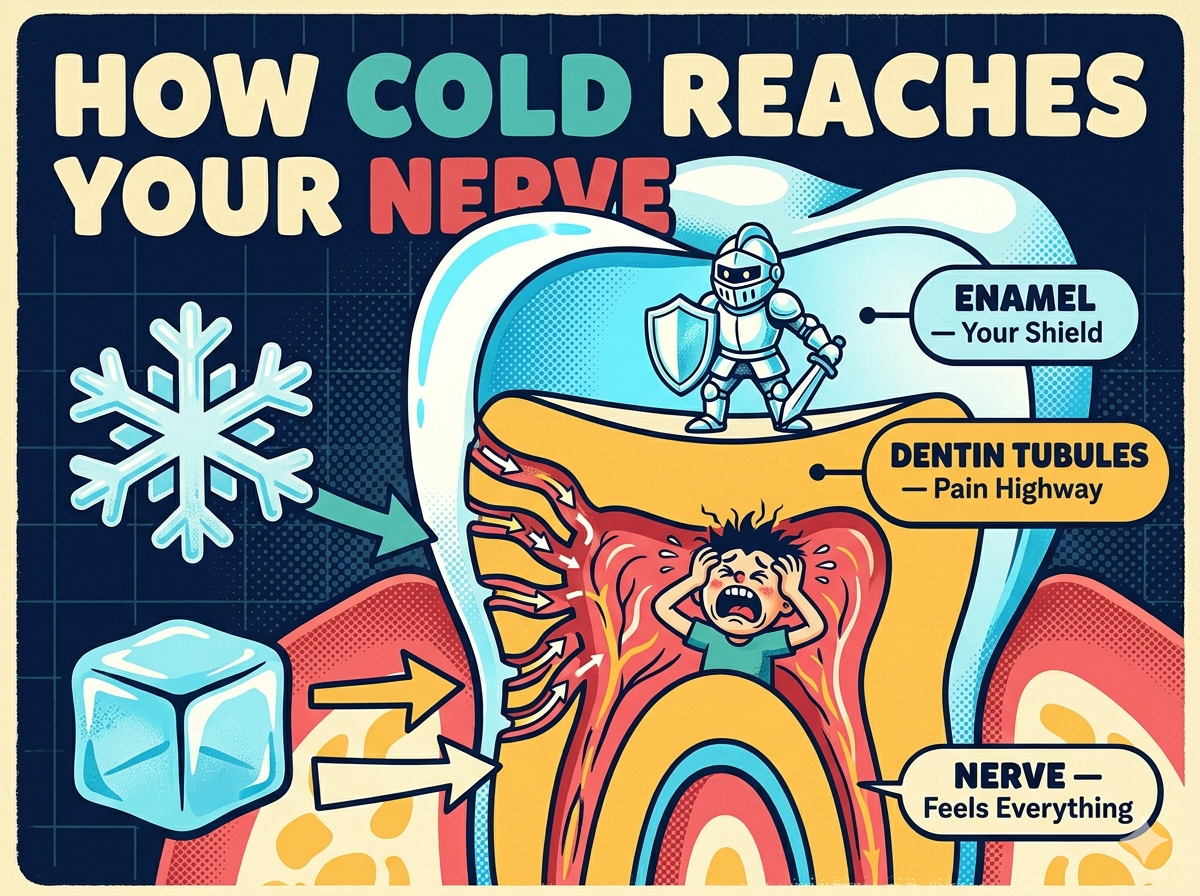
To understand cold sensitivity, you need a quick look at how a tooth is built. Your tooth has three main layers:
- Enamel: the hard, semi-transparent outer shell that protects the tooth from the outside world
- Dentin: the softer middle layer filled with thousands of microscopic fluid-filled channels called dentinal tubules that lead straight to the nerve
- Pulp: the innermost core containing the nerve and blood supply
When enamel is thick and healthy, it acts as insulation hot and cold temperatures never reach the nerve. But when enamel wears down, or when gums pull away and expose the root surface (which has no enamel at all), those dentinal tubules open to the outside world. A sip of cold water travels through those tiny channels, stimulates the nerve, and produces that unmistakable sharp pain. This is the core mechanism behind virtually every case of cold-sensitive teeth.
The Most Common Causes of Cold Tooth Sensitivity
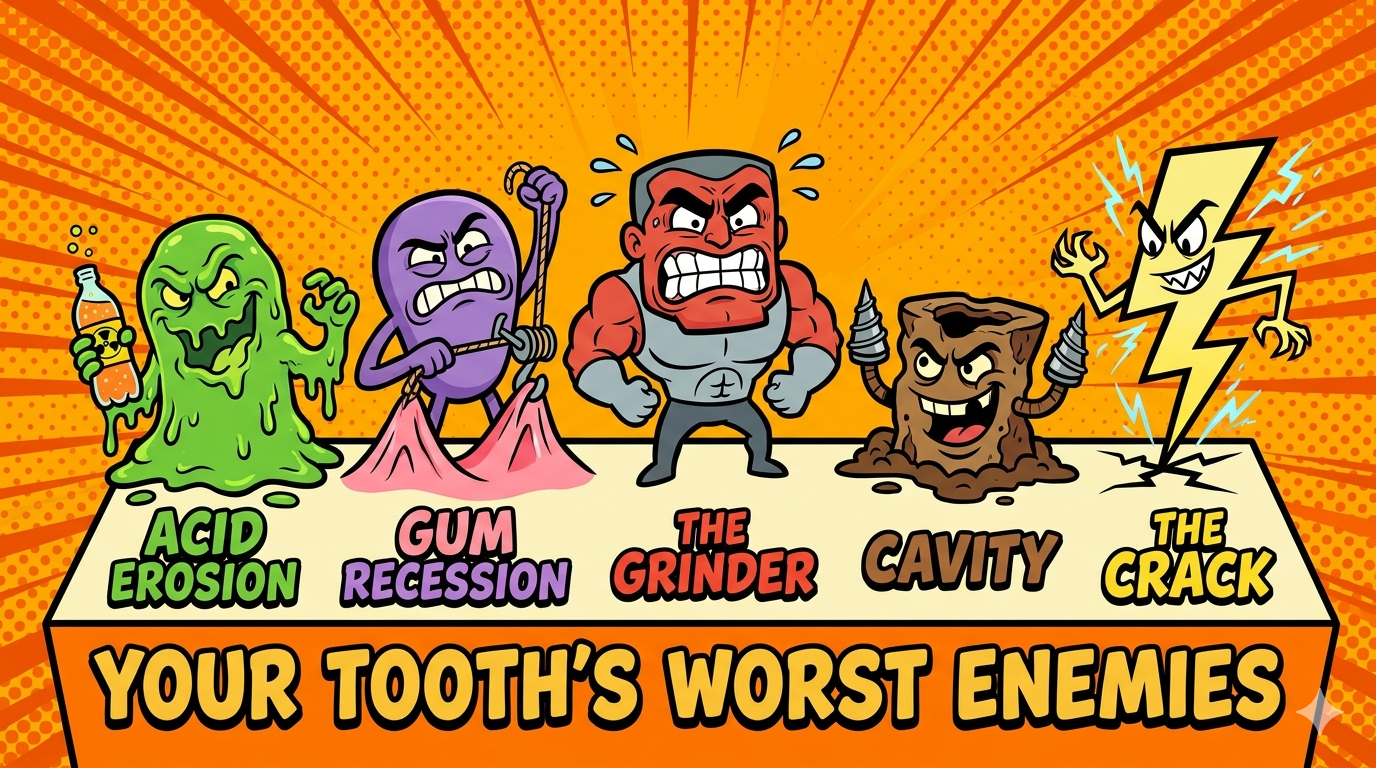
1. Enamel Erosion from Acidic Foods and Drinks
One of the most frequent and most underestimated causes of cold sensitivity is dietary acid. Fizzy drinks, citrus fruits, sports drinks, wine, kombucha, and even sparkling water carry a low pH that gradually dissolves the mineral surface of enamel. You do not feel it happening. Over months and years, enamel thins, and cold temperatures begin reaching the nerve.
Brushing immediately after acidic food or drink makes this worse acid temporarily softens enamel, and brushing within 30 minutes scrubs away that softened layer. Waiting before brushing and rinsing with plain water first can meaningfully slow erosion.
2. Gum Recession: The Hidden Culprit Most People Miss
While most articles focus on enamel erosion, gum recession is equally responsible for cold sensitivity and it is often missed because it develops slowly and silently. The root surface beneath your gum line contains no enamel at all. It is covered only by a thin material called cementum. When gums recede due to gum disease, aggressive brushing, ageing, or tobacco use, the root becomes directly exposed to food, drink, and temperature change.
Even slight recession of just one or two millimetres can make a single tooth intensely sensitive to cold. If your teeth look longer than they used to, or sensitivity is concentrated near the gum line, recession may be the primary cause.
3. Teeth Grinding (Bruxism) : A Cause Most People Do Not Know They Have
Bruxism is the habit of grinding or clenching teeth, usually during sleep. Because it happens unconsciously, many people are unaware until a partner mentions the sound or until symptoms appear. The constant friction gradually wears enamel flat, particularly on the biting surfaces of back teeth. As enamel thins, dentin becomes exposed, and sensitivity follows.
Jaw soreness in the morning, frequent headaches, and visibly flattened tooth surfaces are other common signals. A custom-fitted nightguard stops further enamel loss while you sleep one of the most cost-effective early interventions available.
4. Cavities (Tooth Decay)
A cavity is essentially a hole in the enamel created by acid-producing bacteria. As decay deepens, it removes the tooth’s protective layers and creates a direct pathway for cold to reach the nerve. Sensitivity from a cavity tends to be localised one specific tooth reacts rather than spread across multiple teeth.
Cavities do not always cause obvious pain in early stages. Cold sensitivity is sometimes the first warning sign of decay that would otherwise go unnoticed until it becomes a much larger problem. This is one of the strongest reasons not to ignore persistent sensitivity.
5. Cracked or Chipped Teeth
Even a hairline crack invisible to the naked eye creates a direct channel from the tooth surface to the nerve. Cracks occur from biting hard objects, mouth trauma, or the repeated stress of grinding. The pain is often sharp and sudden triggered by biting, releasing bite pressure, or cold contact. A small crack stabilised with a crown today can split further and require extraction if ignored.
6. Recent Dental Treatment
It is entirely normal to experience temporary sensitivity after a filling, crown, cleaning, or whitening treatment. The tooth has been disturbed and needs time to settle sensitivity from routine dental work typically fades within one to three weeks. If it is worsening rather than improving, or persists beyond three weeks, your dentist should assess whether the pulp is inflamed.
Is It One Tooth or Many? Why the Difference Matters
This is one of the most clinically useful things a patient can observe before their appointment and it is missing from every competing article on this topic.
If only ONE tooth is sensitive to cold, look for:
- A developing cavity in that specific tooth
- A cracked filling or the tooth structure itself
- Localised gum recession at that tooth’s root
- Root exposure from an old filling that has shrunk or shifted
If MULTIPLE or ALL teeth are sensitive to cold, consider:
- Generalised enamel erosion often diet or acid reflux related
- Widespread gum recession from untreated gum disease
- Bruxism affecting the whole arch of teeth simultaneously
The treatment approach differs completely depending on which applies. One sensitive tooth may need a filling, bonding, or crown. Widespread sensitivity needs a comprehensive review of diet, brushing habits, gum health, and potentially a nightguard. A thorough dental examination is the only reliable way to determine which situation you are in.
That Cold Pain Won’t Go Away? Here Is What Your Tooth Is Telling You
Brief cold sensitivity that fades within a few seconds is usually manageable with home care. But certain patterns suggest something more serious is happening:
| Symptom Pattern | What It May Indicate |
|---|---|
| Pain lingers more than 30 seconds after cold exposure | Nerve inflammation (pulpitis) may need root canal assessment |
| Spontaneous pain with no trigger at all | Possible abscess or advanced decay |
| Sensitivity plus visible swelling or gum inflammation | Active infection seek prompt care |
| One tooth suddenly far more sensitive than before | Cracked tooth, failing filling, or new cavity |
| Sensitivity following trauma to the mouth | Possible nerve damage professional evaluation needed |
What You Can Do at Home Right Now
If your sensitivity is mild, these five steps can meaningfully reduce discomfort while you arrange a check-up:
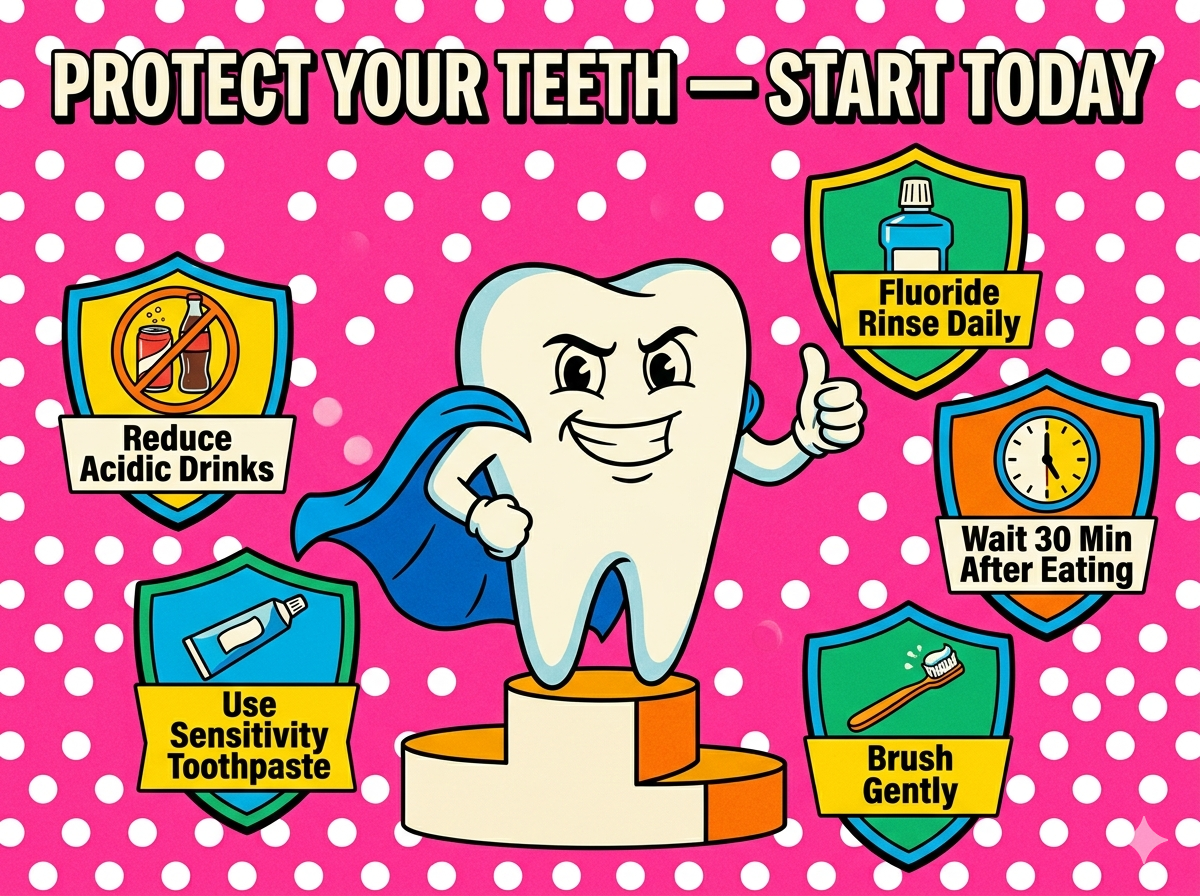
- Switch to desensitising toothpaste. Look for potassium nitrate or stannous fluoride. These block dentinal tubules or calm nerve transmission. Results build over two to four weeks do not expect overnight relief. For faster results, dab a small amount directly on the sensitive spot before bed.
- Use a soft-bristled toothbrush with gentle pressure. Hard bristles and scrubbing motions are among the most preventable causes of enamel erosion and gum recession. Use gentle circular strokes at the gum line, never back-and-forth sawing.
- Wait 30 minutes after eating before brushing. Especially important after acidic food or drinks. Acid temporarily softens enamel brushing during that window accelerates erosion significantly.
- Rinse with fluoride mouthwash daily. Fluoride strengthens enamel and helps remineralise early surface erosion. A low-cost, high-impact addition to your daily routine.
- Reduce acidic and sugary drinks. You do not need to eliminate them just be aware of frequency and rinse with plain water immediately after. Using a straw also reduces direct tooth contact.
Professional Treatments for Cold-Sensitive Teeth
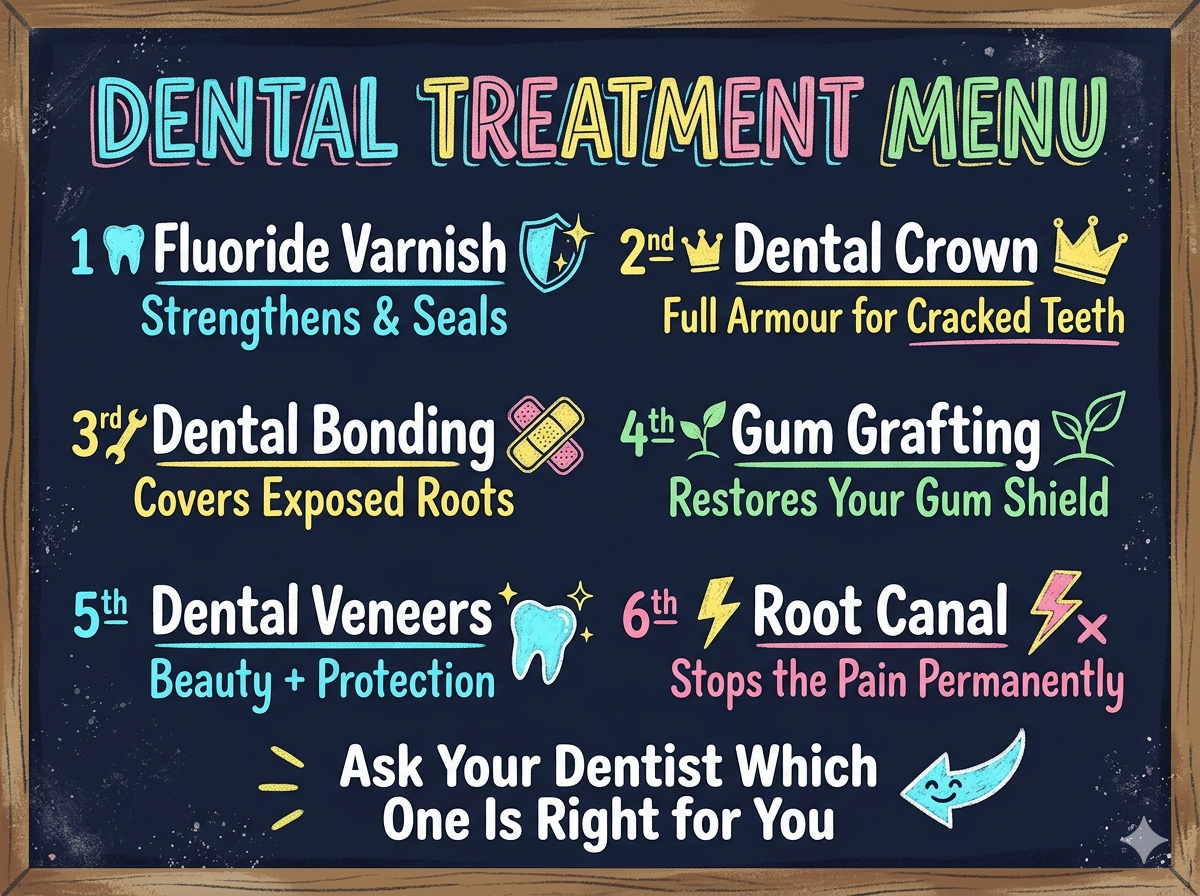
When home care is not enough, or when a structural issue is identified, professional treatment resolves sensitivity at the source. The right option depends entirely on the underlying cause:
Frequently Asked Questions
Sudden onset usually means something has recently changed a new cavity has developed, a filling has cracked or shrunk, or a period of dietary change or stress-related grinding has accelerated enamel wear. It can also follow a dental cleaning, which is normal and temporary. If it does not settle within two weeks, see your dentist.
Occasional, very brief sensitivity to extremely cold food is within the range of normal. Consistent sensitivity across multiple teeth, or sensitivity triggered by mildly cold drinks, is not normal it suggests widespread enamel erosion or gum disease that warrants professional evaluation.
In many cases, yes. Treating the underlying cause filling a cavity, placing a crown on a cracked tooth, grafting receded gums permanently resolves sensitivity. Lost enamel cannot regrow, but exposed dentin can be covered with bonding or veneers. Bruxism-related sensitivity is manageable long-term with a custom nightguard.
Yes, temporarily. Peroxide in whitening products penetrates enamel and irritates the nerve during treatment. This typically resolves within a few days of stopping. If sensitivity is severe or persistent, speak to your dentist before continuing any whitening regimen.
Usually one to three weeks. If it worsens or persists beyond that, return to your dentist the tooth's pulp may be inflamed and require further assessment.
Conclusion: Do Not Let Cold Sensitivity Become a Bigger Problem
Cold tooth sensitivity is common but common does not mean normal, and it certainly does not mean permanent. It is one of the clearest early-warning signals your mouth sends. Caught early, treatment is almost always straightforward and conservative. Ignored, solutions become more complex, more invasive, and more expensive.
Whether the cause is enamel erosion from your diet, gum recession, teeth grinding at night, or a developing cavity, the right approach starts with understanding what is happening in your specific case. A short dental visit provides a clear answer and a practical plan and in most cases, relief comes sooner than patients expect.

Dr. Talpa is a licensed dentist with 12 years of clinical experience and owner of Advanced Smile Dental Care. Dedicated to making dental health information accessible, Dr. Talpa writes to help readers make informed decisions about their oral care. With a background in general and cosmetic dentistry, Dr. Talpa is passionate about translating complex dental topics into practical advice. When not treating patients, Dr. Talpa enjoys staying current with the latest advances in dental science and technology.