

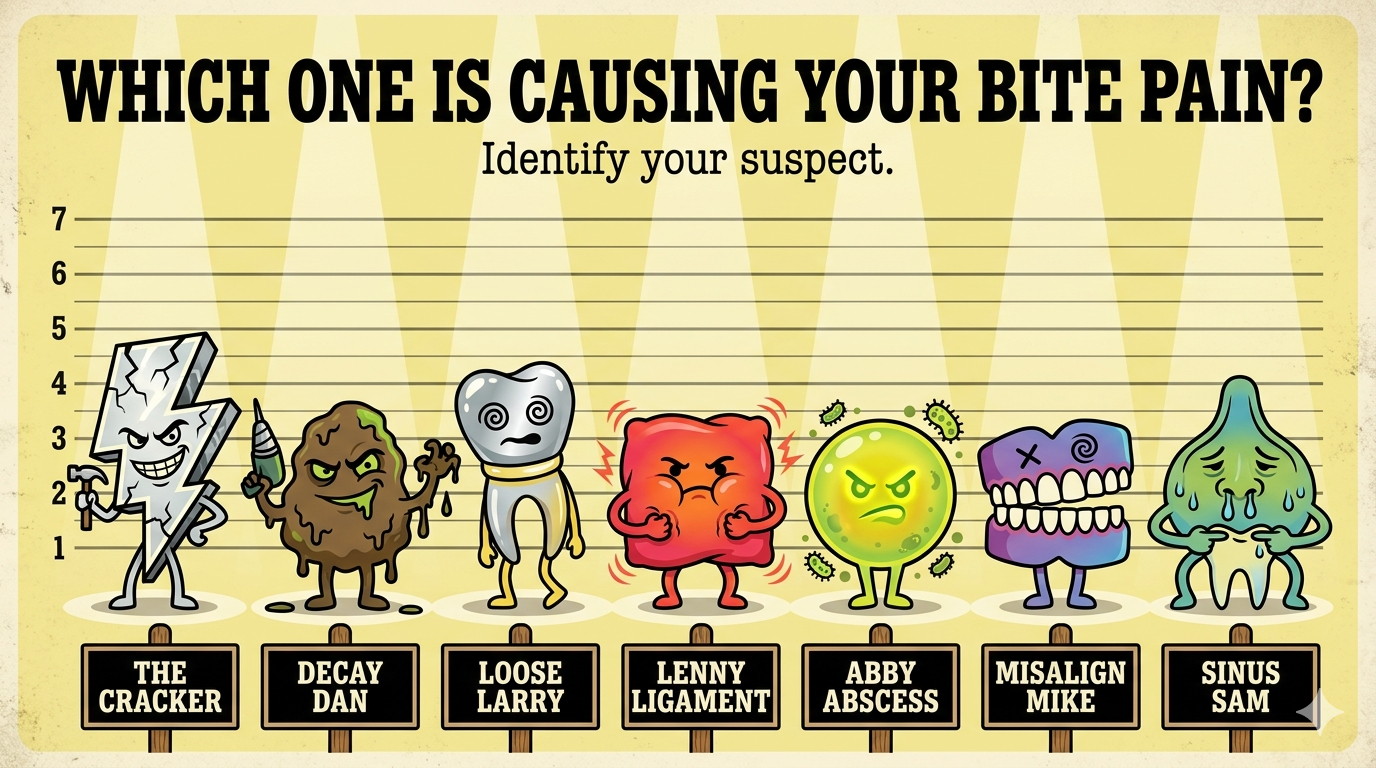
Tooth pain when biting down is almost always caused by a structural problem inside or around the tooth. When pressure is applied while chewing or biting, it aggravates an already damaged or inflamed area triggering sharp or throbbing pain. The most common causes are a cracked tooth, deep cavity, loose or worn filling, inflamed periodontal ligament, bite misalignment, dental abscess, or sinus pressure pushing on upper tooth roots. Unlike general toothache, bite-triggered pain usually points to a specific tooth with a specific problem which is why it tends to get worse if left untreated.
One minute you are eating normally. The next, a sharp jolt of pain fires through a tooth the moment you bite down. You back off, try again cautiously, and it happens again. That specific, pressure-triggered pain is not random it is your tooth telling you something has changed inside it. This guide explains every reason that happens, how serious each cause is, and what you should do about it.
Why Does Biting Down Trigger Pain at All?
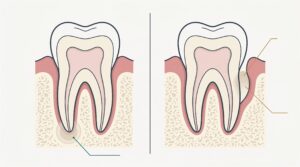
To understand why pressure causes pain, you need to know that every tooth sits in a small cushion of tissue called the periodontal ligament a network of fibres that holds the tooth in its socket and absorbs the force of biting. Inside the tooth, the pulp contains the nerve and blood supply. When either of these structures is damaged, irritated, or infected, the mechanical force of biting compresses the affected tissue and sends a direct pain signal to the nerve.
This is why bite pain is almost always localised one specific tooth, or even one specific part of a tooth, responds to pressure while everything else feels fine. If you are curious about how the inner layers of a tooth work and why they become vulnerable, our dental services page gives a clear overview of how we assess and treat each layer of the tooth depending on where damage has occurred.
The Most Likely Reasons Your Tooth Hurts When You Bite Down
1. A Cracked or Fractured Tooth
A cracked tooth is one of the most common and most frequently missed causes of bite pain. The crack does not have to be large or visible. Even a hairline fracture, invisible on an X-ray, flexes open slightly every time you bite down and pinches the nerve inside. The pain is often sharp, momentary, and reproducible meaning it happens in the same spot every time you chew on that side.
Cracks are caused by biting hard objects, grinding teeth at night, old large fillings that weaken the surrounding tooth structure, or simply the accumulation of years of chewing force. Left untreated, a small crack can split the tooth entirely at which point extraction may be the only option. A dental crown placed early is usually the most effective way to hold a cracked tooth together and stop the pain permanently, before the fracture reaches the nerve or root.
2. Deep Cavity or Advanced Tooth Decay
When decay reaches deep into the tooth and approaches the pulp, biting down compresses the softened, decayed tissue and irritates the nerve directly. The pain from a cavity-related bite issue tends to be duller than a crack more of a sustained ache than a sharp jolt and may linger for several seconds after you stop chewing.
According to the World Health Organization’s oral health data, dental caries remains one of the most widespread health conditions globally, and deep decay that causes bite pain has usually been developing silently for months before symptoms appear. At this stage, a filling may no longer be sufficient a crown or root canal treatment may be necessary depending on how close the decay is to the pulp.
3. A Loose, Worn, or High Filling or Crown
Dental restorations do not last forever. A filling that has cracked, shrunk slightly over time, or become loose creates two problems simultaneously: it no longer seals the tooth properly, allowing bacteria to enter underneath, and it changes the way biting force is distributed across that tooth. If a new filling or crown sits even slightly too high even a fraction of a millimetre above the natural bite every chew sends excess pressure onto that one tooth rather than spreading it evenly across your whole bite.
This kind of bite pain often starts immediately after a dental procedure and feels like the tooth is always “hitting first.” It is one of the most straightforward causes to fix a simple bite adjustment by your dentist resolves it quickly. If you have had recent dental work and are experiencing this, our contact page makes it simple to book a follow-up check.
4. An Inflamed Periodontal Ligament
The periodontal ligament the cushioning tissue around the tooth’s root can become inflamed without any visible damage to the tooth itself. This is called periodontal ligament inflammation or apical periodontitis, and it makes the tooth acutely sensitive to biting pressure. Even light contact can cause significant pain. The causes include trauma (biting something unexpectedly hard, a knock to the face), a “high” filling putting chronic excess force on the ligament, or infection spreading from the pulp into the surrounding tissue.
The European Society of Endodontology classifies periapical inflammation as one of the most common reasons patients present with pressure sensitivity, and it is important to distinguish it from a cracked tooth because the treatment path is different. A dentist can usually identify which is the cause through a combination of percussion testing and X-ray assessment.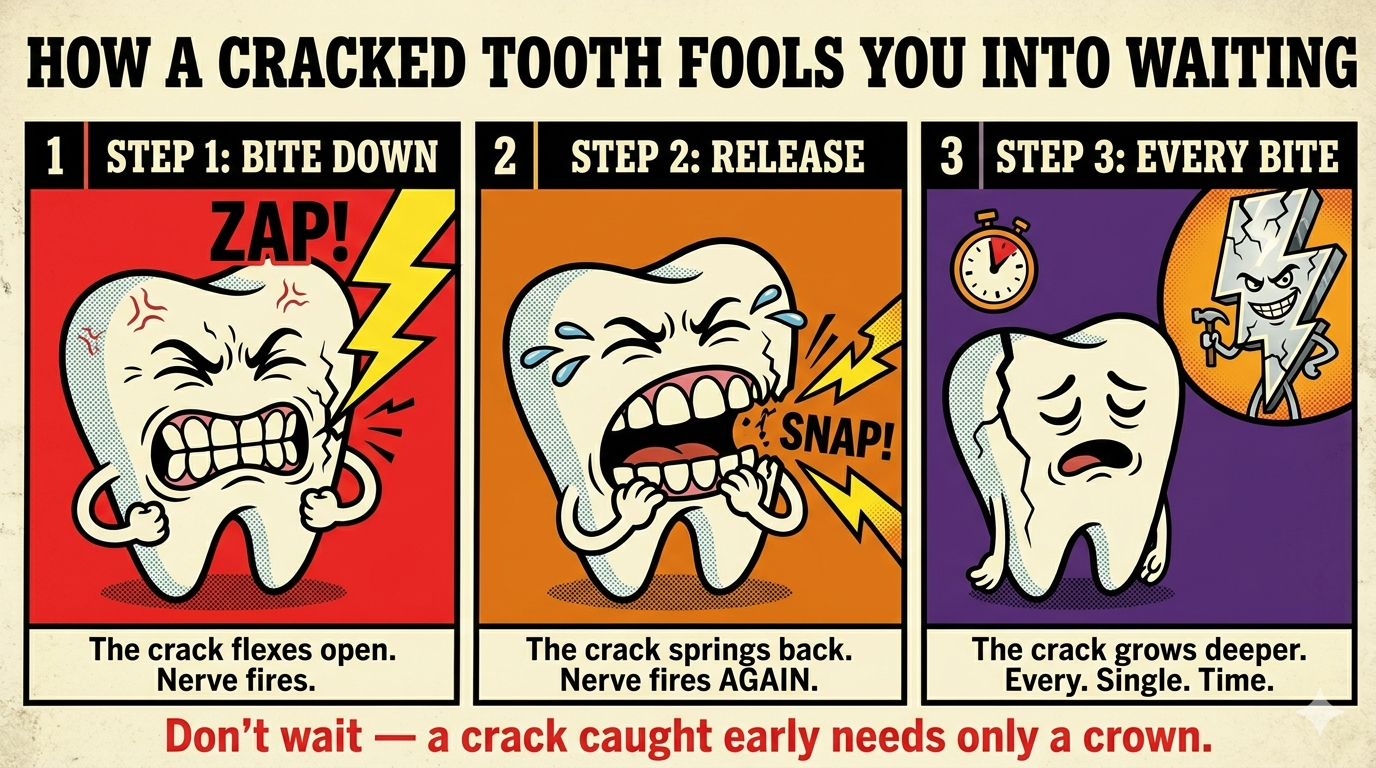
5. A Dental Abscess
An abscess is a pocket of bacterial infection that forms at the root tip of a tooth or in the surrounding gum tissue. The pressure of biting down on a tooth with an abscess at its root compresses the infected area and causes significant pain often throbbing, deep, and severe. Other signs that an abscess may be present include swelling in the jaw or gum, a persistent bad taste in the mouth, a small pimple-like bump on the gum near the painful tooth, and fever.
A dental abscess is the one cause on this list that constitutes a genuine dental emergency. Infection does not resolve on its own it spreads. If you have bite pain alongside any swelling or fever, you should seek dental care urgently rather than waiting for a routine appointment.
6. Gum Disease (Periodontitis)
Advanced gum disease causes the bone and ligament supporting the tooth to break down progressively. As the tooth loses its structural foundation, it may become slightly mobile and a tooth that moves even slightly under biting pressure triggers pain in the inflamed surrounding tissue. Bite pain from periodontitis is often accompanied by bleeding gums, visible gum recession, and bad breath.
Early intervention makes a significant difference with gum disease. Our prevention and gum health page outlines the approaches we use to stop progression before bone loss becomes severe and in many cases, consistent professional care and improved home hygiene is enough to stabilise the condition.
7. Sinus Pressure The Non-Dental Cause Nobody Expects
This is the cause that surprises most people. The roots of your upper back teeth (molars and premolars) sit remarkably close to the maxillary sinuses the air cavities behind your cheekbones. When those sinuses become congested or inflamed due to a cold, flu, allergies, or a sinus infection, the pressure pushes directly down onto the tooth roots, creating what feels exactly like tooth pain when biting. The key diagnostic clue: sinus-related tooth pain usually affects multiple upper back teeth simultaneously and feels like a dull ache rather than a sharp bite response.
According to guidance from the British Dental Association, sinus-related dental pain is one of the most common misdiagnoses patients make themselves they assume they need a filling or root canal when the actual cause is congestion that resolves on its own. A dentist can distinguish sinus pain from true tooth pain through clinical testing within minutes.
When That Cold Sting or Bite Pain Stops Being Minor
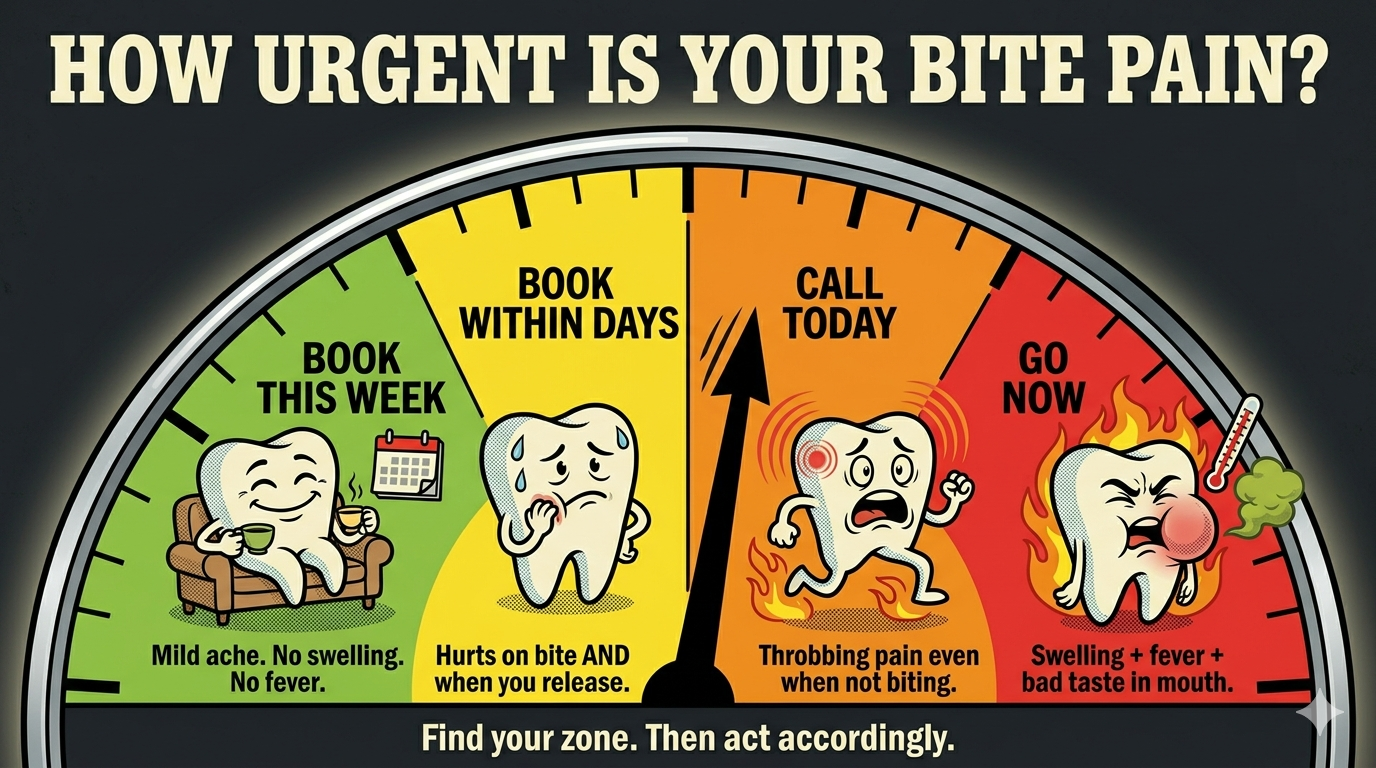
Most people tolerate bite pain for longer than they should, hoping it resolves on its own. In some cases like a temporarily inflamed ligament after biting something hard it does. But in the majority of cases, bite pain reflects structural damage that does not heal without intervention. Here are the signals that mean you should not wait:
| What You Are Experiencing | What It Likely Means |
|---|---|
| Pain that lingers more than 30 seconds after biting | Nerve is inflamed possible pulpitis or abscess developing |
| Swelling in jaw, cheek, or gum near the tooth | Possible abscess seek care urgently |
| Pain has been present for more than 2 weeks | Not self-resolving structural cause needs professional diagnosis |
| Pain getting progressively worse, not better | Condition is advancing earlier treatment = simpler treatment |
| Visible crack, chip, or darkening of the tooth | Structural damage confirmed crown or root canal likely needed |
| Fever or bad taste accompanying the pain | Possible infection dental emergency |
What to Do Right Now Before Your Appointment
These steps will not fix the underlying cause, but they will meaningfully reduce discomfort while you wait to be seen:
- Chew on the opposite side. Avoid putting any biting pressure on the painful tooth. This prevents the crack or inflamed tissue from being aggravated further and keeps the pain manageable.
- Rinse with warm salt water. Mix half a teaspoon of salt in a glass of warm water and swish gently for 30 seconds. This reduces bacterial activity around the tooth and soothes inflamed gum tissue without harming enamel.
- Take an over-the-counter anti-inflammatory. Ibuprofen reduces both pain and inflammation which is the actual source of most bite pain. Take it as directed on the packaging. As noted in BDA patient guidance, anti-inflammatories are more effective for dental pain than paracetamol alone because they address the inflammatory cause, not just the pain signal.
- Avoid temperature extremes. Hot and cold foods can trigger additional nerve sensitivity in an already compromised tooth. Stick to room-temperature food and drink until you have been seen.
- Do not attempt to self-diagnose or fix it. Do not bite down hard deliberately to “test” the tooth, and do not apply clove oil or other home remedies directly to an open crack this can worsen inflammation or mask a symptom that your dentist needs to evaluate.
How a Dentist Actually Figures Out What Is Going On
One of the most reassuring things to know is that bite pain even from causes as difficult to spot as hairline cracks is very diagnosable in a clinical setting. The methods a dentist uses include:
- Percussion testing gently tapping the tooth with a dental instrument to identify exactly which tooth and which part of the tooth responds to pressure
- Bite testing with a bite stick a small device you bite down on that isolates individual cusps to pinpoint where a crack is located, even without X-ray visibility
- Dental X-rays essential for identifying abscesses, bone loss from gum disease, and deep decay, though hairline cracks often remain invisible on standard X-ray
- Transillumination shining a focused light through the tooth to make cracks visible that would otherwise be missed, which the European Society of Endodontology recognises as a key diagnostic tool for cracked tooth syndrome
- Cold and heat sensitivity testing distinguishing between reversible pulpitis (nerve inflamed but recoverable) and irreversible pulpitis (nerve too damaged to recover) guides whether a filling or root canal is the appropriate treatment
What Treatment Looks Like Depending on the Cause
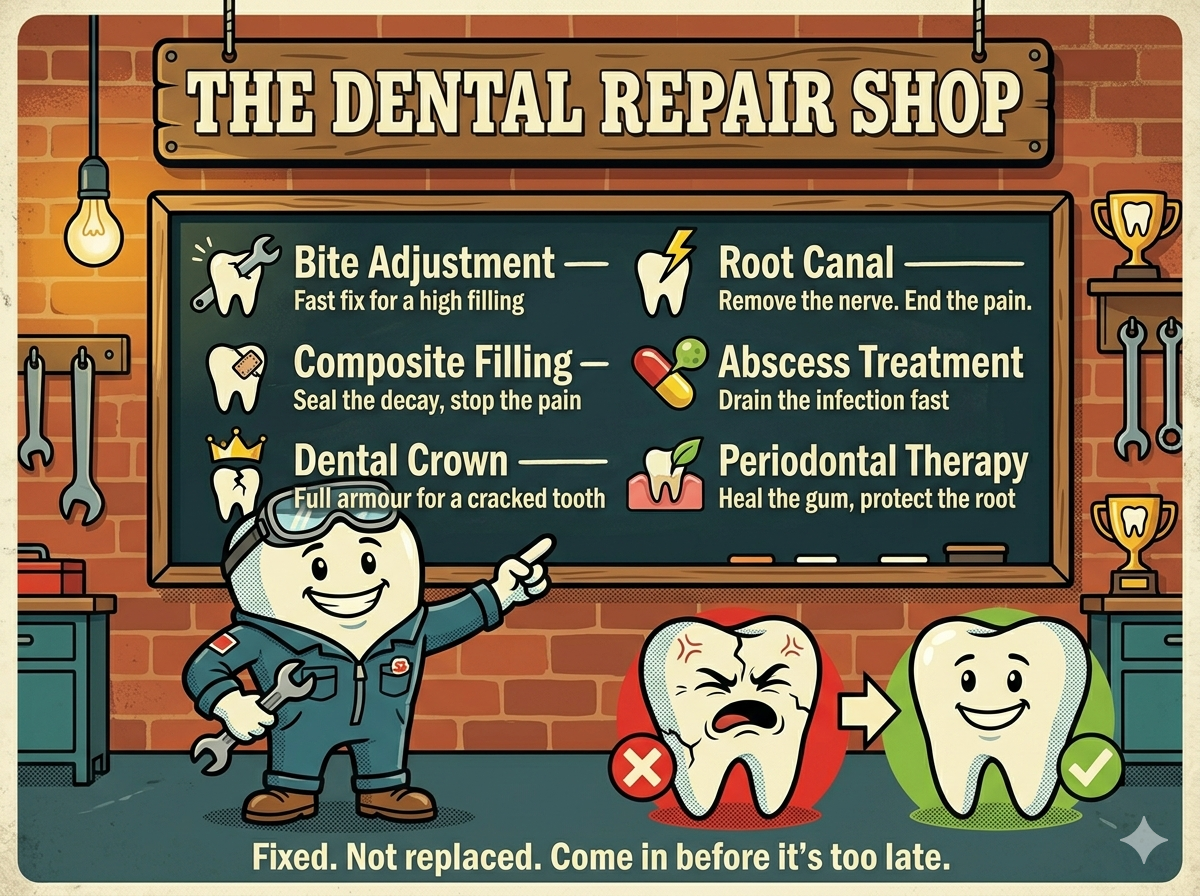
Treatment is never one-size-fits-all for bite pain it depends entirely on what is causing it. Here is what each cause typically requires:
- Hairline crack: A dental crown to hold the tooth together and stop the flexing that causes pain. The sooner it is placed, the less likely the crack extends into the root.
- Deep cavity: Root canal treatment to remove the infected pulp, followed by a crown to protect the tooth structure. If caught before the pulp is affected, a large filling or inlay may suffice.
- High filling or crown: A simple bite adjustment a 10-minute procedure in the dental chair that removes the excess height and immediately relieves pressure.
- Inflamed periodontal ligament: Treatment of the underlying cause adjusting a high bite, treating the infected pulp, or resolving the trauma. The ligament itself recovers once the source of inflammation is removed.
- Abscess: Root canal treatment or extraction, combined with antibiotics if infection has spread into surrounding tissue. This is not a condition where waiting is safe.
- Gum disease: Deep cleaning (scaling and root planing) to remove calculus below the gum line, followed by an ongoing maintenance schedule. Our prevention programme includes this as part of long-term gum health management.
- Sinus pressure: No dental treatment needed managing the sinus congestion with appropriate medication resolves the tooth pain alongside it. A dentist’s role here is to confirm the diagnosis and rule out a true tooth cause.
Questions People Ask Most About Tooth Pain When Biting
Bite-triggered pain that is localised to one tooth almost always means that tooth has a specific structural problem a crack, cavity, loose restoration, or abscess. The precision of the pain is actually helpful diagnostically because it narrows the cause immediately. A dentist can usually identify which tooth and why within a single appointment using percussion testing and bite analysis.
In rare cases such as when the periodontal ligament has been temporarily inflamed from biting something unexpectedly hard the pain does resolve within a few days without treatment. However, if the pain persists beyond one week, or is caused by a crack, cavity, or abscess, it will not heal on its own. These are structural problems that require professional intervention. Waiting typically allows the condition to worsen and makes treatment more complex.
An abscess usually presents with bite pain alongside additional signs: swelling in the gum, jaw, or cheek near the painful tooth; a persistent throbbing rather than a sharp bite response; a bad taste or smell coming from near the tooth; a small raised bump on the gum; and sometimes fever or swollen lymph nodes. If you have any of these alongside bite pain, treat it as urgent and contact a dentist the same day. You can reach us directly through our contact page.
Not necessarily. Root canal treatment is only needed when the pulp the nerve inside the tooth is infected or irreversibly inflamed. Many causes of bite pain, such as a high filling, mild crack, or inflamed ligament, can be resolved with far less invasive treatment. Only a clinical examination determines what is actually required. The earlier you seek assessment, the more treatment options remain available.
The 3-3-3 rule is an informal guideline some dental professionals use to describe the pattern of worsening dental pain: pain that lasts 3 seconds suggests mild sensitivity; pain lasting 3 minutes suggests moderate nerve involvement; and pain that is constant for 3 days suggests irreversible pulp damage requiring root canal treatment. While it is a useful rough guide, the European Society of Endodontology recommends professional clinical testing rather than self-assessment for determining the severity of pulp involvement.
Painkillers can reduce discomfort temporarily, but they do not address the underlying structural problem. For causes like a crack or abscess, waiting allows the condition to advance a crack can split further, and an abscess can spread. The British Dental Association advises that persistent or worsening tooth pain should always be evaluated professionally rather than managed indefinitely with over-the-counter medication.
The Bottom Line Bite Pain Is a Signal Worth Acting On
Tooth pain when biting down is not something to quietly adapt to. Unlike general tooth sensitivity, bite pain almost always points to a specific structural issue that is identifiable, treatable, and when caught early fixable with minimal intervention. The longer the signal is ignored, the more limited the treatment options become.
Whether the cause turns out to be a hairline crack, a failing filling, an abscess, or simply sinus pressure from a cold, a proper clinical examination gives you a clear answer and a clear path forward. Our team at Talpa Dental provides thorough bite assessments across both our locations and will explain exactly what is happening and what your options are before any treatment begins.

Dr. Talpa is a licensed dentist with 12 years of clinical experience and owner of Advanced Smile Dental Care. Dedicated to making dental health information accessible, Dr. Talpa writes to help readers make informed decisions about their oral care. With a background in general and cosmetic dentistry, Dr. Talpa is passionate about translating complex dental topics into practical advice. When not treating patients, Dr. Talpa enjoys staying current with the latest advances in dental science and technology.