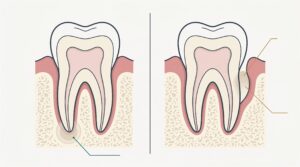


Dental veneers are thin, custom-made shells of tooth-colored material that are bonded to the front surface of your teeth to improve their appearance. Veneers work by covering up cosmetic imperfections like stains, chips, cracks, and gaps while keeping your natural teeth intact. They’re an option for people who want a more attractive smile without major dental work.
What are veneers?
Veneers are thin, custom-made shells of porcelain or composite resin material that are bonded to the front surface of your teeth. They are purely cosmetic restorations designed to improve the appearance of your teeth. Unlike crowns that cover entire teeth or fillings that repair internal damage, veneers cover only the front surface of healthy teeth.
Veneers work by bonding permanently to your tooth using dental cement. Once bonded, they become part of your tooth structure and stay there permanently. Because the bonding requires removing some tooth enamel, you should think of veneers as a long-term commitment. Once you get veneers, your teeth will always need veneers.
Who needs dental veneers?
Veneers are best for people who have healthy teeth but want to fix appearance problems. They work well for specific cosmetic concerns.
Common reasons people get veneers:
Staining that won’t go away. Some teeth get permanently stained from medications, aging, or things that stain deeply. Professional whitening can’t fix these stains because the discoloration is inside the tooth. Veneers cover the entire front of the tooth so the staining isn’t visible.
Chipped or cracked teeth. Small chips on your front teeth can look bad, but if the tooth is otherwise healthy, a veneer can cover the damage. If the chip is large or the tooth structure is compromised, a crown might be better.
Small gaps between teeth If you have a small space between your front teeth, a veneer can make each tooth look wider so the gap appears smaller. This works for minor spacing issues. For larger gaps or gaps affecting many teeth, orthodontics usually works better.
Slightly crooked teeth Veneers can hide mild misalignment by changing how the tooth looks. The tooth isn’t actually moved, but by making it look wider or changing its shape, the misalignment becomes less noticeable. Severe crookedness needs orthodontics.
Worn-down teeth If your teeth have worn down from grinding, age, or acid erosion, veneers can make them look longer and restore their appearance.
Teeth with unusual shapes Sometimes teeth have an uneven edge or an odd shape. Veneers can create a more uniform, attractive tooth shape.
Veneers vs. crowns: What’s the difference
Crowns and veneers are both tooth restorations, but they serve different purposes and require different amounts of tooth preparation.
Crowns cover your entire tooth. They are used when a tooth is damaged, decayed, or weakened. Crowns restore function and appearance. Crowns require more tooth removal than veneers because they must cover the entire tooth structure.
Veneers cover only the front surface. They are purely cosmetic and preserve more tooth structure. Veneers require minimal enamel removal and work only on healthy teeth. If your tooth is damaged or decayed, you need a crown, not a veneer.
Are there different types of veneers?
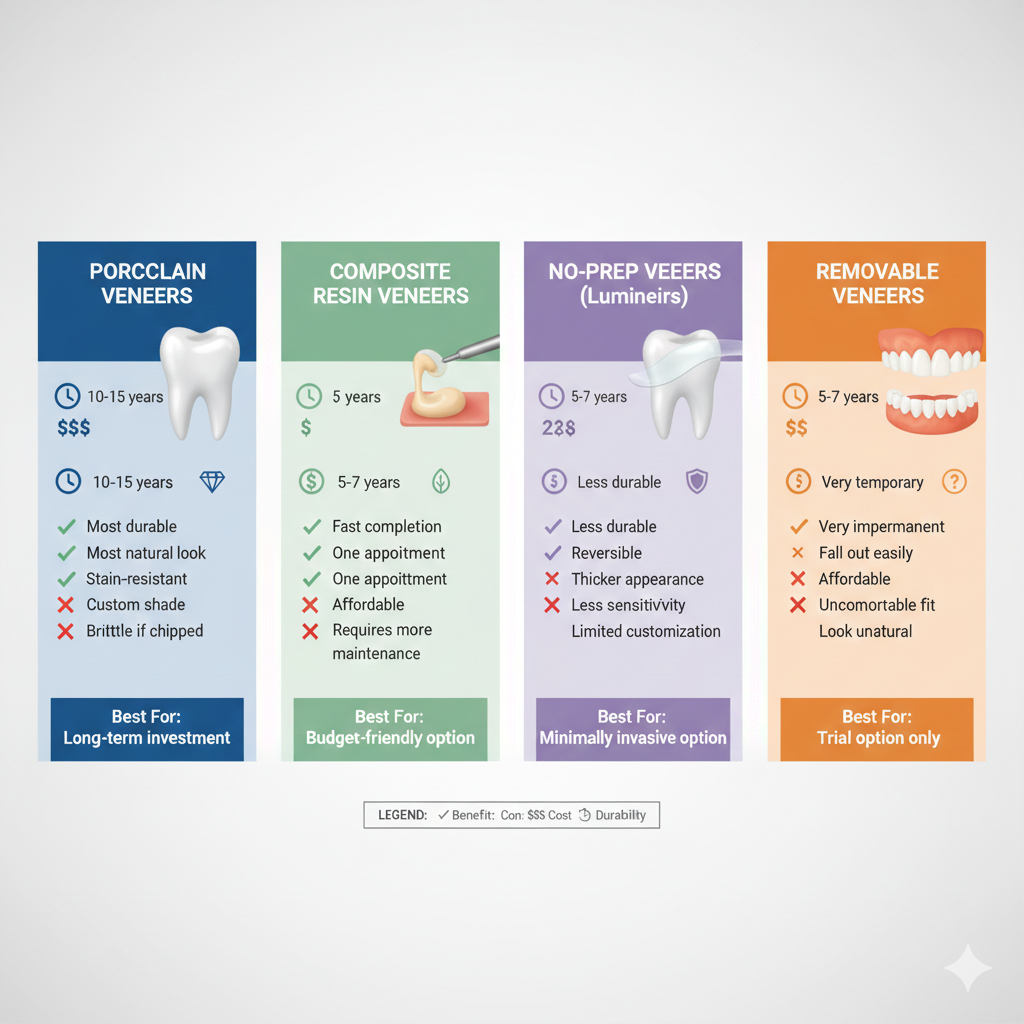
Yes, there are four main types of veneers available, each with different benefits and drawbacks.
Porcelain veneers
Porcelain veneers are made in a dental laboratory from dental porcelain. They’re custom-made for your specific teeth based on impressions the dentist takes.
Why people choose porcelain: Porcelain looks very natural because it mimics how real tooth enamel looks it’s slightly translucent and has a natural shine. Porcelain is very strong and durable. It resists staining better than other materials. The color match is excellent because they’re custom-made in a lab and your dentist can pick exactly the right shade.
Challenges with porcelain: Porcelain is more expensive than composite. Porcelain veneers take longer to get because they have to be made in a lab you’ll have temporary veneers while you wait. If a porcelain veneer chips or cracks, it usually has to be completely replaced rather than repaired. Getting porcelain veneers requires removing more enamel than composite veneers.
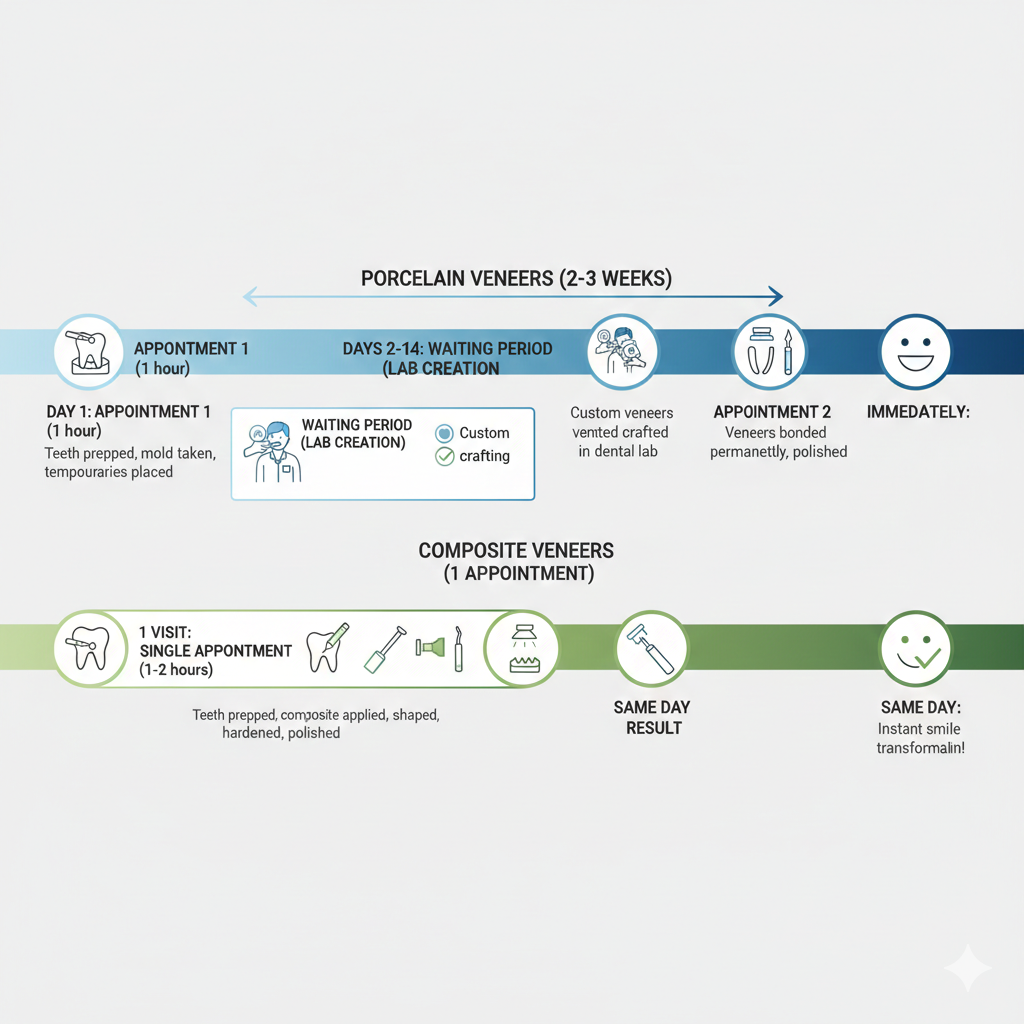
What happens: Your dentist will numb your tooth and remove a thin layer of enamel from the front and sides. Then they’ll take an impression of your tooth and send it to the lab. While the lab makes your veneers, you’ll wear temporary ones so your teeth don’t look bad and they’re protected. When your permanent veneers come back from the lab, your dentist will check the fit and shade, then bond them permanently to your teeth.
Composite veneers
Composite veneers are made from tooth-colored resin material that’s applied directly to your tooth.
Why people choose composite: Composite is more affordable than porcelain. Your dentist can complete composite veneers in one appointment there’s no waiting for a lab. Composite requires less enamel removal than porcelain. If composite chips, it’s easier to repair because your dentist can add more material rather than replacing the entire veneer. Composite veneers are somewhat reversible because the material can be removed.
Challenges with composite: Composite doesn’t last as long as porcelain. It’s more likely to stain and discolor over time. Composite can chip or crack more easily than porcelain. You’ll need touch-ups and maintenance more frequently. It doesn’t look quite as natural as porcelain.
What happens: Your dentist removes a small amount of enamel. Then they apply the composite material directly to your tooth in layers. Each layer is hardened with a special light. Once all the layers are applied, your dentist shapes and polishes the veneer to look natural.
No-prep veneers
No-prep veneers (like the brand Lumineers) are ultra-thin veneers that require minimal enamel removal or no enamel removal at all.
Why people choose no-prep: Because they require minimal preparation, they’re less invasive. They’re more reversible than traditional veneers. They might cause less tooth sensitivity. The process is faster.
Challenges with no-prep: No-prep veneers don’t last as long as traditional veneers. They can look thicker or bulkier. There are fewer shade options. They’re more likely to break or come off. They don’t work for all situations.
Removable veneers
Removable veneers are cosmetic shells that sit over your teeth like a removable retainer.
Why someone might choose removable: They’re non-invasive because no enamel is removed. They’re completely reversible. They’re generally less expensive.
Why most dentists don’t recommend them: They’re very temporary and unstable. They can fall out while you’re eating or talking. The fit is often uncomfortable. They don’t look as natural as bonded veneers. They’re high maintenance. Most cosmetic dentists don’t recommend removable veneers.
Treatment Details
What happens before dental veneer placement?
If you decide veneers are right for you, your dentist will discuss the process with you first. During your consultation, your dentist evaluates your teeth and gums to make sure they’re healthy. They assess how much enamel you have and whether your teeth are suitable for veneers.
Your dentist will also discuss your goals and expectations. They’ll explain what veneers can and can’t do. They’ll talk about the different types available and help you understand the pros and cons of each.
Before treatment begins, any gum disease or tooth decay needs to be taken care of. Your teeth and gums need to be healthy. If you grind your teeth, discuss this with your dentist you may need to wear a protective guard before getting veneers.
What happens during veneer placement?
When you’re ready to get your veneers, the actual placement happens differently depending on whether you’re getting porcelain or composite.
For porcelain veneers, your dentist numbs your tooth so you’re comfortable. They remove a thin layer of enamel from the front and sides of your tooth. Then they take an impression of the prepared tooth. Your dentist selects the shade that best matches your natural teeth or achieves your desired appearance. While the lab makes your custom veneers, temporary veneers are placed on your teeth so you have teeth that look decent and your prepared teeth are protected. When your permanent veneers come back from the lab, you come back for another appointment. Your dentist removes the temporary veneers and checks your permanent ones for fit and shade. Any adjustments are made. Then the permanent veneers are bonded to your teeth using dental cement.
For composite veneers, your dentist numbs your tooth and removes a small amount of enamel. Then they apply the composite material directly to your tooth in layers. Each layer is hardened with a light. Your dentist shapes and sculpts the material to match your tooth and look natural. The entire process happens in one appointment.
Many people worry that veneer treatment will be painful. During the preparation phase, your tooth is numbed so you shouldn’t feel pain just pressure or vibration. Some sensitivity to temperature may occur after placement, which usually improves over time.
Do dental veneers require special care?
Once you have veneers, you need to take care of them properly to make them last.
Daily care: Brush your teeth twice a day with a soft-bristled toothbrush and non-abrasive toothpaste. Avoid whitening toothpaste and toothpaste with harsh abrasives these can scratch your veneers. Floss daily, especially around veneer margins where food can get trapped. Use gentle brushing technique to avoid gum irritation.
Habits to avoid: Don’t use your teeth as tools to open packages or crack items. Avoid chewing on ice, hard candy, or other hard objects. Don’t bite into very tough foods directly cut them into smaller pieces. If you grind your teeth, wear a protective night guard. Grinding puts too much pressure on veneers and they can break.
Professional care: Visit your dentist regularly for professional cleanings and checkups. Professional care removes buildup that regular brushing and flossing miss. Your dentist can check your veneers for any problems and address them early.
Watch for problems: If a veneer feels loose, cracks, or starts to come off, contact your dentist. If you notice staining on the edges of your veneers, have your dentist check it. If your bite feels off or your veneers are uncomfortable, tell your dentist.
Risks / Benefits
What are the advantages of dental veneers?
Dramatic smile improvement: Veneers can create dramatic improvements in smile appearance. Minor imperfections that seemed permanent are instantly concealed.
Minimally invasive: Veneers require less tooth reduction than crowns and are far less invasive than implants or extensive orthodontic treatment. Your natural tooth structure is largely preserved.
Natural appearance: When properly made and placed, veneers look completely natural and are indistinguishable from real teeth. Professional shade matching and shaping create seamless, attractive smiles.
Long-lasting solution: Veneers provide durable, long-term smile enhancement. With proper care, they can last several years.
Customizable: Each veneer is custom-made to your specific needs. Shade, shape, size, and length are all customized to create your ideal smile.
What are the disadvantages of veneers?
Enamel removal is permanent: Once tooth enamel is removed for veneer bonding, it cannot be restored. This is irreversible. You will permanently need veneers on those teeth.
Veneers themselves aren’t permanent: While the enamel removal is permanent, the veneers themselves will eventually need to be replaced. The exact timeline depends on veneer type and your care habits.
Possible chipping or breakage: While durable under normal use, veneers can chip or crack from trauma or excessive force. Damage repairs depend on material type.
Increased tooth sensitivity: Some patients experience temporary or lasting sensitivity to temperature after veneer placement. This typically decreases over time.
Not suitable for all cases: Veneers are purely cosmetic. If teeth have significant structural damage, large decay areas, or major damage, crowns or other restorations are more appropriate.
Teeth become more vulnerable: After enamel removal, teeth are more vulnerable to decay. Excellent oral hygiene becomes essential for veneer longevity.
Gum irritation possible: If veneers extend below the gum line or if cement isn’t properly cleaned, gum irritation can occur. Proper placement minimizes this risk.
Do veneers damage your teeth?
Veneers themselves don’t damage teeth, but the preparation process removes enamel permanently. The underlying tooth structure remains intact under the veneer. However, after enamel removal, teeth are more vulnerable to decay and always require protection via the veneer.
Are veneers permanent?
The enamel removal required for veneer placement is permanent. However, the veneers themselves are not permanent and will eventually require replacement or maintenance. How long they last depends on what material they’re made of and how well you care for them.
Recovery and Outlook
How can I keep my veneers in good condition?
Daily oral hygiene: Brush your teeth twice daily with a soft-bristled toothbrush and non-abrasive toothpaste. Floss daily, especially around veneer edges. Use gentle brushing technique.
Avoid damaging habits: Don’t use teeth as tools. Avoid chewing ice, hard candy, or hard foods. Cut tough foods into smaller pieces. If you grind your teeth, wear a protective night guard.
Professional dental care: Visit your dentist regularly for professional cleanings and checkups. Professional cleanings remove buildup and your dentist can assess veneer integrity.
Monitor for problems: Contact your dentist if a veneer feels loose, develops cracks, appears to have cement breakdown, or if your bite feels off.
Protect from grinding: If you grind your teeth, wear a protective night guard to prevent veneer damage.
Frequently Asked Questions
Can I whiten my teeth if I have veneers?
Whitening doesn’t work on veneer material. If you think you might want whiter teeth in the future, have your teeth whitened before you get veneers so your veneers can be shaded to match your desired tooth color.
How many veneers do I need?
You might get veneers on just one tooth or across your entire visible smile. Most people get veneers on their upper front teeth. You only need veneers where they’ll be seen.
Can veneers come off?
Veneers bonded with modern dental cement rarely come off. If one does loosen, your dentist can re-bond it. This doesn’t usually require replacing the entire veneer.
What if my veneer chips or breaks?
If a composite veneer chips, your dentist can usually add more material to repair it. If a porcelain veneer cracks or chips significantly, it usually needs to be replaced entirely.
Can I get veneers if I grind my teeth?
If you grind your teeth, you need to wear a protective night guard before getting veneers. Grinding creates too much pressure and veneers will break. Your dentist can recommend a guard.
Will my teeth look too big or bulky?
When veneers are designed and placed properly, they look completely natural. A skilled dentist shapes them to match the size and shape of your natural teeth. They should blend seamlessly with your smile.
Does the process hurt?
The preparation process uses numbing medication so you shouldn’t experience pain. You’ll feel pressure and vibration but not pain. Some sensitivity after placement is normal.
What should I do if my bite feels wrong after veneer placement?
If your bite feels uncomfortable or wrong when you bite down, tell your dentist right away. They can adjust the veneers while you’re still in the office. Don’t wait until you leave it’s much easier to fix while the veneers are being bonded.
When To Call the Doctor
Contact your dentist if you experience pain or sensitivity that doesn’t improve with sensitivity toothpaste. If you notice a veneer is loose, cracked, or starting to come off, have it checked. If your gums become swollen or irritated, especially around your veneers, let your dentist know. If your bite feels uncomfortable or wrong, have your dentist adjust your veneers. If you notice staining on the edges of your veneers or if they’re discoloring, have your dentist evaluate them.
Final Thoughts
Veneers are a cosmetic option for people who want to improve their smile. They can make a dramatic difference in appearance. However, they’re a permanent decision because enamel removal can’t be undone. You need to be committed to caring for your veneers and maintaining excellent oral hygiene.
If you’re considering veneers, discuss your goals and concerns with an experienced cosmetic dentist. They can evaluate whether veneers are right for you and explain what to expect. With proper care and realistic expectations, veneers can give you a smile you love.