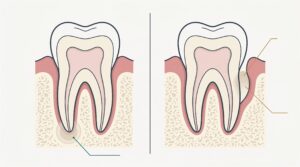


Wisdom teeth removal is a surgical procedure that extracts your third molars (wisdom teeth) when they cause problems or threaten your oral health. Many people need their wisdom teeth removed because these teeth often develop in positions that complicate eruption, cause crowding, or create conditions for decay and infection.
In simple terms: Your oral surgeon removes problematic wisdom teeth surgically to prevent pain, infection, and damage to your other teeth.
Essential Facts About Wisdom Teeth Removal
What it is: Surgical extraction of one or more wisdom teeth performed by an oral surgeon
Why you might need it: Impaction, crowding, decay, infection, cysts, or damage to adjacent teeth
Common problems: Pain, swelling, difficulty opening mouth, infection, gum disease
Procedure time: 15 minutes to 1 hour per tooth (impacted teeth take longer)
Anesthesia: Local anesthesia, IV sedation, or general anesthesia
Recovery: First week has most discomfort; full healing in 7-10 days
Complications: Dry socket, nerve damage, infection (rare with proper care)
What Are Wisdom Teeth?
Wisdom teeth are your third molars, located at the back of your mouth (two on top, two on bottom). They typically develop in your late teens or early twenties, erupting years after your other permanent teeth.
Historically, wisdom teeth were necessary for eating tough, uncooked foods. However, modern diets and smaller human jaws mean wisdom teeth are often unnecessary and frequently problematic. Many people don’t have enough space for these teeth to erupt properly. At Talpadent, we help patients understand their oral health needs and provide expert solutions for managing problematic wisdom teeth and other dental concerns.
When Wisdom Teeth Removal is Necessary
Not everyone needs wisdom teeth removal. Your dentist recommends extraction when wisdom teeth cause problems or threaten your oral health. Several situations indicate removal is necessary.
Impaction and Eruption Problems
Impacted wisdom teeth are teeth trapped beneath the bone or gum tissue and cannot erupt naturally. Impaction occurs in different ways:
Soft tissue impaction: Tooth is covered by gum tissue only (not bone), making eruption more likely but still difficult. Bacteria accumulate under the gum, causing infection.
Partial bony impaction: Tooth is partially covered by both bone and gum tissue. This is more complicated than soft tissue impaction and more likely to require surgical removal.
Complete bony impaction: Tooth is completely surrounded by bone. Surgical bone removal is necessary to extract the tooth.
Impacted wisdom teeth are the most common reason for extraction. Even if they don’t hurt now, they’ll likely cause problems eventually.
Crowding and Misalignment
Erupting wisdom teeth push against adjacent teeth, causing crowding and misalignment. This is especially problematic if you’ve had orthodontic treatment (braces). Wisdom teeth pressure can undo years of orthodontic work by shifting teeth out of position.
When your jaw doesn’t have adequate space, wisdom teeth growth creates pressure on your second molars and surrounding teeth. Many people choose wisdom teeth removal to protect their orthodontic investment and maintain proper alignment.
Decay and Infection
Partially erupted or crowded wisdom teeth are extremely difficult to clean. Your toothbrush cannot effectively reach behind them, and floss cannot access tight spaces. Food particles and bacteria accumulate, creating cavities and gum disease.
Wisdom teeth decay is particularly problematic because the cavity often develops on the back surface of the tooth, making it invisible until infection develops. By the time problems become obvious, significant decay and infection may be present.
Gum disease around wisdom teeth (pericoronitis) causes inflammation, swelling, and infection of the gum tissue surrounding the tooth. This painful condition requires treatment and often leads to wisdom teeth removal.
Cyst Formation
Sometimes fluid-filled sacs (cysts) develop around impacted wisdom teeth. These cysts can grow large enough to damage the jawbone and adjacent teeth. Early removal of problematic wisdom teeth prevents cyst formation.
Damage to Adjacent Teeth
As wisdom teeth push against your second molars, they can cause resorption (bone loss) around the second molar roots. This weakens the second molar and may eventually require extraction. Removing problematic wisdom teeth early prevents damage to healthy teeth.
Signs You Might Need Wisdom Teeth Removal
Recognizing warning signs allows you to see your dentist before severe problems develop. Several symptoms suggest wisdom teeth removal may be necessary.
Pain and discomfort:
- Sharp pain in the back of your mouth
- Jaw pain or stiffness
- Soreness around the back molars
- Pain when chewing or opening your mouth
Swelling and inflammation:
- Swollen gums around wisdom teeth
- Facial swelling on the affected side
- Difficulty opening your mouth fully (trismus)
- Swollen lymph nodes under your jaw
Signs of infection:
- Red, tender, or bleeding gums around wisdom teeth
- Pus around the tooth
- Bad breath or bad taste in your mouth
- Fever (indicates serious infection)
Crowding:
- Your other teeth are shifting out of alignment
- Recent orthodontic treatment is being undone
- Increasing crowding despite good oral hygiene
Visible problems:
- Partially erupted tooth visible at gum line
- Tooth growing at an angle
- Difficulty cleaning around the back teeth
- Visible decay on wisdom teeth
If you experience any of these signs, contact your dentist for evaluation. Early intervention prevents complications and often results in simpler extractions.
Wisdom Teeth Extraction Procedure: Step-by-Step
Understanding what happens during wisdom teeth removal reduces anxiety and helps you prepare appropriately.
Step 1: Evaluation and Planning
Your dentist examines the tooth and takes X-rays or 3D imaging to assess its position and complexity. The imaging reveals whether the tooth is impacted, how deeply it’s positioned, and whether extraction can be done routinely or requires surgical techniques.
Your dentist determines:
- How many teeth need removal
- Whether all can be removed in one appointment
- What anesthesia is appropriate
- Surgical approach required
Time: 15-30 minutes
Step 2: Anesthesia Administration
Local anesthesia numbs the area around the wisdom tooth completely. Some patients prefer IV sedation for anxiety management. General anesthesia may be used when removing all four wisdom teeth simultaneously.
Options:
- Local anesthesia alone (patient awake)
- Local with nitrous oxide (relaxed but conscious)
- IV sedation (drowsy, minimal memory)
- General anesthesia (unconscious)
Step 3: Tooth Removal
For routine erupted or partially erupted wisdom teeth, your dentist uses an elevator to loosen the tooth and forceps to extract it. The procedure takes 15-30 minutes per tooth.
For impacted wisdom teeth, bone removal is often necessary:
Bone removal: A small amount of bone covering the tooth must be removed using a drill. This allows access to the tooth.
Tooth sectioning: Impacted wisdom teeth are sometimes sectioned (cut into smaller pieces) for easier removal. Removing pieces individually is easier than extracting the whole tooth.
Careful extraction: Your dentist carefully removes the tooth to minimize trauma to surrounding bone and tissue.
Step 4: Site Care and Closure
After tooth removal, the socket is cleaned of any remaining bone fragments and infected tissue. The area is flushed with saline solution to remove debris.
Closure options:
- Gauze placed over socket (controls bleeding)
- Stitches placed if gum flap was created
- Bone fill material placed (optional, helps healing)
Time: 10-15 minutes
Step 5: Recovery Room Monitoring
You recover in the office while anesthesia wears off. Vital signs are monitored, pain is managed, and discharge instructions are reviewed.
Recovery After Wisdom Teeth Removal
Recovery from wisdom teeth extraction follows a predictable timeline. Understanding what to expect helps you manage your recovery effectively.
First 24 Hours: Immediate Recovery
Expect:
- Numbness from anesthesia (lasts several hours)
- Mild to moderate pain (increases as anesthesia wears off)
- Swelling begins immediately (increases over first 24 hours)
- Oozing or light bleeding
- Difficulty opening mouth
Pain management:
- Prescribed pain medication taken as directed
- Ice applied (20 minutes on, 20 minutes off)
- Head elevated while resting
- Over-the-counter pain relievers as recommended
Critical:
- Don’t disturb surgical sites (no rinsing, spitting, sucking)
- Don’t use straws (suction can dislodge blood clots)
- Don’t smoke (impairs healing)
- Don’t drink alcohol
- Rest as much as possible
Days 2-7: Early Healing
Expect:
- Peak swelling at 48-72 hours (completely normal)
- Pain decreasing each day
- Slight bruising may appear
- Sutures (if used) remain in place
- Slight difficulty opening mouth
Care:
- Continue ice for first 48-72 hours
- Switch to warm compresses after 72 hours
- Continue pain management
- Gentle oral hygiene (avoid extraction sites)
- Soft foods only
- Stay well hydrated
When to contact your surgeon:
- Excessive bleeding (not controlled after 30 minutes of pressure)
- Severe pain (uncontrolled by medication)
- Fever above 101°F
- Increasing swelling after 72 hours
- Signs of infection (spreading redness, pus, bad odor)
Week 2 and Beyond: Later Healing
Expect:
- Swelling resolved
- Bruising fades
- Pain minimal
- Sutures removed (if used)
- Can gradually return to normal diet
- Can resume normal activities
Timeline:
- Most discomfort resolves by day 7-10
- Bone fills in the socket over 3-6 months
- Complete healing takes 7-10 days for visible symptoms
Complications Specific to Wisdom Teeth
While most wisdom teeth removals proceed without complications, understanding potential problems helps you recognize when to seek care.
Dry Socket (Alveolar Osteitis)
Dry socket occurs when the blood clot that forms in the extraction socket dislodges prematurely, exposing the bone.
Signs:
- Severe pain 3-4 days after extraction
- Foul smell or taste
- Visible bone in the socket
Risk factors:
- Smoking (smoking is the primary risk factor)
- Difficult extractions
- Poor oral hygiene
- Vigorous rinsing or spitting
Treatment: Your surgeon treats it with medicated dressing and pain management. It resolves within a few days with proper treatment.
Nerve Damage
Wisdom teeth are located near nerves that provide sensation to your mouth and chin. Temporary numbness is common and usually resolves within weeks. Permanent nerve damage is rare.
Temporary paresthesia:
- Numbness of lower lip, tongue, or chin
- Usually resolves within days to weeks
- Sensation returns gradually
Infection
While infection is possible, it’s rare with proper post-operative care and antibiotic use when indicated.
Signs of infection: Fever, increasing pain after day 3, spreading redness, pus discharge
Prevention: Follow post-operative instructions, take prescribed antibiotics, maintain oral hygiene
FAQ: Common Questions About Wisdom Teeth Removal
Q: Do all wisdom teeth need to be removed?
A: No. If wisdom teeth erupt properly, don’t cause crowding, and can be cleaned effectively, they can be left in place. However, most people benefit from removal.
Q: Why do wisdom teeth hurt more?
A: Wisdom teeth hurt more because they’re in the back of your mouth where bacteria accumulate easily. Partially erupted teeth trap bacteria under the gum. Once infected, the pain can be severe until treated.
Q: Can I have all four wisdom teeth removed at once?
A: Yes, removing all four in one appointment is possible and often recommended. This means one recovery period instead of multiple appointments. However, general anesthesia is usually necessary when removing all four.
Q: Can my general dentist remove my wisdom teeth?
A: General dentists can extract routine wisdom teeth. However, impacted or complex wisdom teeth are usually referred to oral surgeons who have specialized training for surgical extractions.
Q: How long until I can eat normally?
A: After the first week, you can gradually resume normal diet. Avoid hot, hard, crunchy, or spicy foods for at least 7 days. By week two, most people are eating most foods. Complete comfort with all foods may take several weeks.
Final Thoughts
Wisdom teeth removal is one of the most common oral surgery procedures. Modern surgical techniques, anesthesia options, and post-operative care make extraction safer and more comfortable than ever before.
If your dentist recommends wisdom teeth removal, it’s because they’ve identified a problem that will likely worsen without intervention. Early removal prevents pain, infection, and damage to healthy teeth. Understanding what to expect before, during, and after extraction helps you prepare appropriately and supports optimal healing.
While wisdom teeth removal is a common procedure, it’s just one type of oral surgery. To understand the full scope of procedures available and when specialist care might be needed, visit our comprehensive guide to oral surgery procedures. This overview helps you understand how wisdom teeth removal fits into the broader context of oral and maxillofacial surgery.

Dr. Talpa is a licensed dentist with 12 years of clinical experience and owner of Advanced Smile Dental Care. Dedicated to making dental health information accessible, Dr. Talpa writes to help readers make informed decisions about their oral care. With a background in general and cosmetic dentistry, Dr. Talpa is passionate about translating complex dental topics into practical advice. When not treating patients, Dr. Talpa enjoys staying current with the latest advances in dental science and technology.